Anti-Counterfeiting Solutions for Electronics Supply Chains
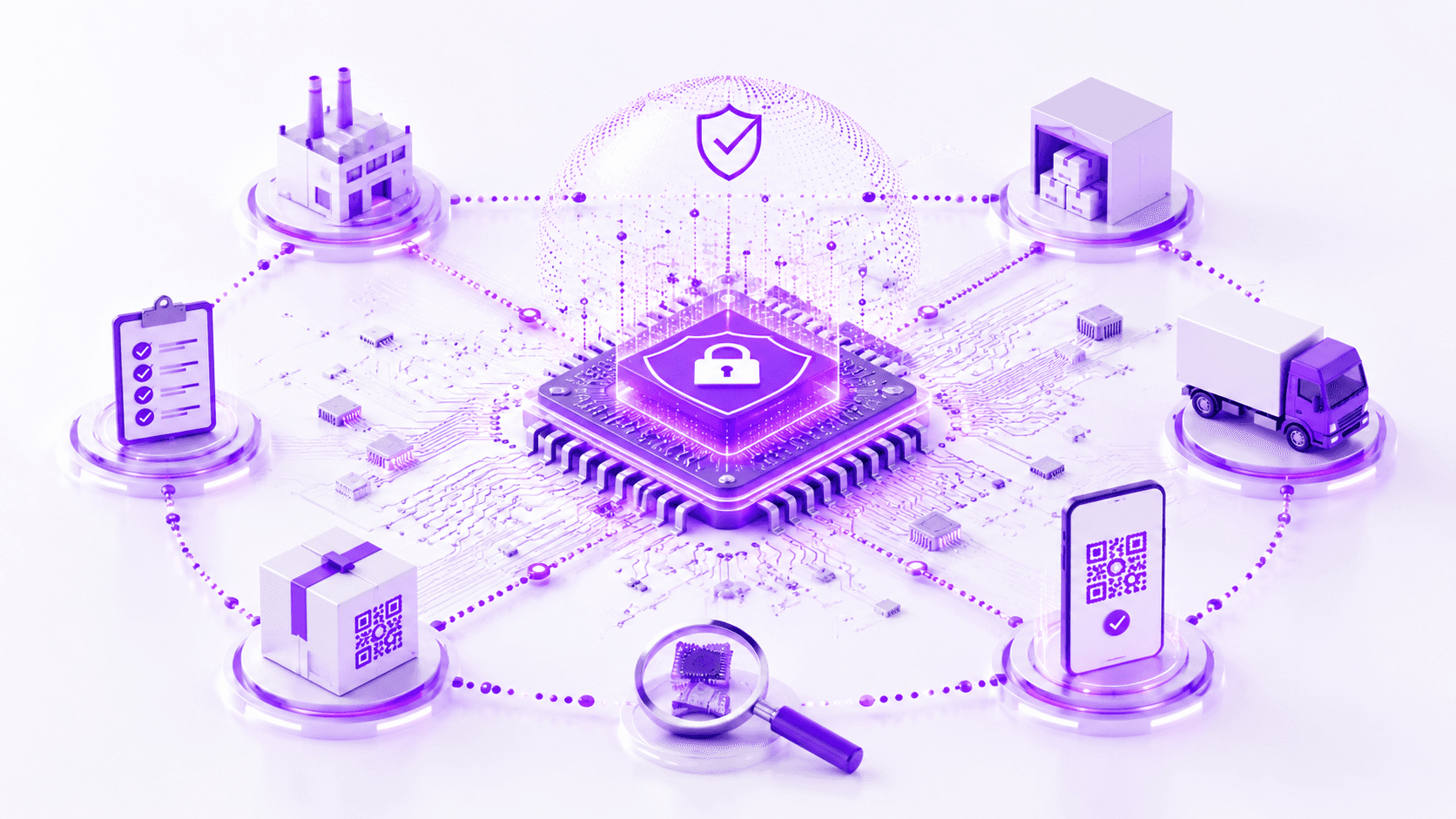
Anti-Counterfeiting Solutions for Electronics Supply Chains: From Supplier Qualification to Field Verification
Counterfeit electronics are no longer a fringe problem. According to the OECD/EUIPO Trade in Counterfeit and Pirated Goods report, electronics consistently rank among the top three most-counterfeited product categories globally, exposing manufacturers to warranty fraud, safety recalls, regulatory penalties, and irreversible brand damage. For Heads of Supply Chain and Operations, the challenge is not simply choosing a technology it is operationalizing anti-counterfeiting solutions across a multi-tier supplier network, integrating authentication data into existing MES and ERP systems, and enabling field teams to verify products quickly and reliably. This buyer guide cuts through the high-level vendor noise and delivers a practical, step-by-step framework: from supplier risk scoring and incoming inspection playbooks to MES/ERP integration patterns and smartphone-based field verification workflows. Whether you are evaluating serialization, RFID, visible overt features, or invisible cryptographic signatures, this guide gives you the decision criteria and implementation roadmap to act with confidence.
Download the Full Electronics Anti-Counterfeiting Buyer Guide (Free PDF)
Get the complete playbook including supplier qualification templates, sampling plan frameworks, MES/ERP integration checklists, and an ROI/cost-avoidance model in a single gated PDF designed for supply chain and operations leaders in electronics manufacturing.
Supply-Chain Risks: The Counterfeit Electronics Threat and Decision Criteria
Counterfeit electronics infiltrate supply chains at multiple nodes from Tier-2 component suppliers to grey-market distributors and aftermarket service channels. The consequences range from field failures and safety incidents to warranty fraud and regulatory non-compliance, each carrying significant financial and reputational exposure. For supply chain leaders, the first step is understanding where risk concentrates and what decision criteria should govern technology selection.
Real-world example #1: A mid-sized European industrial electronics OEM discovered that counterfeit capacitors from an unauthorized Tier-2 supplier in Southeast Asia had entered its production line, resulting in a field recall affecting approximately 12,000 units and an estimated €4.2 million in warranty and logistics costs. The root cause was an absence of authentication checkpoints at incoming inspection the supplier had passed standard visual QA but the components lacked any cryptographic or serialized verification layer.
Real-world example #2: SupplyChainBrain's coverage of electronics brand protection highlights that counterfeit electronic parts are a persistent risk in both commercial and defense supply chains, with legislative drivers such as the U.S. NDAA Section 818 mandating traceability and authentication for defense-grade components. Non-compliance can result in contract termination and debarment consequences that dwarf the cost of implementing a robust authentication program.
Traditional Approach vs. Ennoventure Approach: Traditional risk management relies on supplier audits, visual inspection, and hologram labels all of which are increasingly defeated by sophisticated counterfeiters who replicate visible security features. Ennoventure's approach embeds invisible cryptographic signatures directly into packaging artwork at the design stage, creating a mathematically unique, clone-resistant authentication layer that requires no physical label, no QR code, and no changes to the production line. The result is a security layer that is invisible to counterfeiters but verifiable in approximately 2.3 seconds via any smartphone camera.
Common Mistake: Many supply chain teams treat anti-counterfeiting as a packaging problem rather than a supply-chain-wide program, deploying a single visible security feature (e.g., a hologram) without addressing upstream supplier risk or downstream field verification. This creates a false sense of security while leaving the most vulnerable nodes incoming goods receipt and field distribution completely unprotected.
Best Practice: Define your decision criteria before evaluating vendors: prioritize cloneability resistance, manufacturing disruption level, field verification speed, and MES/ERP integration capability. Score each technology option against these criteria using a weighted matrix, and involve QA, Legal, and Finance stakeholders in the scoring process to build cross-functional alignment from the outset.
Regulatory Checkpoints for Electronics Anti-Counterfeiting
Key regulatory frameworks shaping electronics anti-counterfeiting requirements include U.S. NDAA Section 818 for defense supply chains, IPC-1782 for component traceability, and emerging EU supply chain due diligence directives. Compliance requires audit-ready chain-of-custody records and authentication scan logs capabilities that Ennoventure's platform generates automatically. Review Ennoventure's QA and cryptographic authentication resource for a detailed regulatory mapping. Conduct a regulatory checkpoint review as the first deliverable of your scoping exercise to avoid costly redesigns later.
With a clear picture of supply-chain risk and decision criteria established, the next step is translating that risk assessment into a structured program scope defining which product lines, supplier tiers, and geographic markets require authentication coverage, and in what priority order. A disciplined scoping exercise prevents the common failure mode of deploying authentication broadly but shallowly, where coverage is wide but verification discipline is weak.
Assessing Risk and Scoping Your Anti-Counterfeiting Program
Effective scoping begins with a supplier risk-scoring exercise that maps each supplier against variables including geographic origin, product category criticality, past non-conformance history, and regulatory exposure. Without a structured scoring model, teams default to protecting only their highest-revenue SKUs missing the safety-critical components that carry the greatest liability.
Real-world example #1: A North American consumer electronics brand used a five-factor supplier risk matrix (geography, component criticality, audit history, volume, and regulatory classification) to identify that 18% of its Tier-2 suppliers accounted for over 70% of its counterfeit exposure. By concentrating authentication deployment on that 18%, the brand reduced incoming inspection failures by an estimated 60% within two quarters without requiring a full supply-base overhaul.
Real-world example #2: Mapcon's 2025 analysis of track-and-trace in supply chain management notes that organizations that scope traceability programs by product taxonomy grouping SKUs by risk tier rather than by business unit — achieve faster ROI and higher scan compliance rates than those that deploy authentication uniformly across all product lines.
Traditional Approach vs. Ennoventure Approach: Traditional scoping exercises are often driven by procurement cost considerations, resulting in authentication being applied only to premium SKUs. Ennoventure's intelligence platform enables risk-based scoping by surfacing counterfeit and diversion signals from field scan data, allowing supply chain teams to dynamically adjust authentication coverage as new risk hotspots emerge rather than relying on static annual audits.
Common Mistake: Scoping programs by revenue tier rather than risk tier consistently leaves safety-critical, lower-revenue components such as power management ICs or connectors unprotected, despite their outsized liability exposure. Always cross-reference revenue ranking with safety and regulatory classification before finalizing scope.
Best Practice: Build a product taxonomy with three tiers Critical (safety/regulatory), High (high-value, high-counterfeit-prevalence), and Standard and assign authentication technology requirements to each tier. Review and update the taxonomy semi-annually as your product portfolio and supplier base evolve.
Supplier Risk Scoring Template
A practical supplier risk score assigns weighted points across five dimensions: (1) geographic origin risk (0–25 pts), (2) component criticality (0–25 pts), (3) audit non-conformance history (0–20 pts), (4) annual volume (0–15 pts), and (5) regulatory classification (0–15 pts). Suppliers scoring above 60 are flagged for mandatory authentication enrollment. Ennoventure's Electronics & Consumer Durables solution includes onboarding workflows that map directly to this scoring model, accelerating supplier enrollment. Cross-reference your scores against GS1 traceability standards to ensure alignment with global supply chain requirements.
Once your program scope is defined and suppliers are risk-ranked, the critical next decision is technology selection. The market offers four primary authentication technology families each with distinct tradeoffs for electronics supply chains and the wrong choice at this stage can create years of operational friction, line disruption, or security gaps that sophisticated counterfeiters will exploit.
Technology Options and Tradeoffs: Serialization, RFID, Overt Features, and Cryptographic Signatures
Electronics supply chain teams evaluating anti-counterfeiting technology face a crowded market with overlapping claims. Understanding the practical tradeoffs — not just the marketing positioning is essential for making a durable technology decision that scales across your supplier network and field operations.
Real-world example #1: A Tier-1 automotive electronics supplier in Germany deployed RFID-based authentication across its component packaging, only to discover that RFID tags were being cloned by a grey-market distributor in Eastern Europe within eight months of deployment. The supplier subsequently layered invisible cryptographic signatures onto packaging artwork, eliminating the cloning vulnerability without requiring any changes to its production line equipment.
Real-world example #2: CadreTech's serialization explainer notes that while serialization provides strong track-and-trace capability, it does not inherently prevent cloning of serial numbers a critical gap for electronics where counterfeiters routinely harvest and re-use legitimate serial numbers from authentic products.
Traditional Approach vs. Ennoventure Approach: Serialization and RFID provide traceability but are vulnerable to number harvesting and tag cloning respectively. Visible overt features (holograms, color-shifting inks) are increasingly replicated by sophisticated counterfeiters and add per-unit cost and label application complexity. Ennoventure's invisible cryptographic signatures embedded at the artwork stage with no physical label or production line change are mathematically unique per unit and cannot be cloned even if the packaging design is perfectly replicated. See the Anti-Counterfeiting Beyond Serialization guide for a detailed technology comparison.
Common Mistake: Selecting a single authentication technology based on unit cost alone, without accounting for total cost of ownership including label application, scanner infrastructure, integration complexity, and the cost of security failures. A hologram that costs $0.02 per unit but is cloned within 12 months has an effective security cost far exceeding a cryptographic solution priced at $0.05 per unit.
Best Practice: Use a five-criteria scoring matrix cloneability resistance, manufacturing disruption, field verification speed, MES/ERP integration complexity, and cost per unit to evaluate each technology option against your specific supply chain context. Weight cloneability resistance and field verification speed most heavily for electronics, where counterfeiting sophistication is high and field teams operate in low-connectivity environments.
Why Invisible Cryptographic Signatures Win for Electronics
Invisible cryptographic signatures embedded in packaging artwork offer three decisive advantages for electronics supply chains: they are undetectable to counterfeiters (no visible feature to clone), they require zero production line changes (embedded at artwork stage), and they verify in approximately 2.3 seconds via any smartphone camera no dedicated scanner or app required. Ennoventure's cryptographic signature technology generates a mathematically unique key per unit, providing forensic-grade proof for legal enforcement and warranty dispute resolution. This combination of security strength and operational simplicity is unmatched by any single alternative technology in the electronics context.
Technology selection is only half the battle. The operational value of any authentication solution depends entirely on how rigorously it is embedded into supplier qualification processes and incoming inspection workflows. Without a structured playbook including sampling plans, QA KPI dashboards, and clear escalation procedures even the strongest authentication technology will fail to catch counterfeits at the point where they are most likely to enter your supply chain.
Supplier Qualification and Incoming Inspection Playbook
Supplier qualification for anti-counterfeiting compliance requires more than a one-time audit. It demands a repeatable onboarding workflow that embeds authentication requirements into supplier agreements, defines incoming inspection sampling plans, and establishes QA KPIs that are tracked continuously not just at annual review cycles.
Real-world example #1: A Southeast Asian consumer electronics contract manufacturer reduced its incoming counterfeit component rate from 3.2% to under 0.4% within six months by implementing AQL Level II sampling plans at goods receipt, combined with smartphone-based cryptographic authentication scans on every sampled unit. The key enabler was a standardized inspection SOP that required authentication scan results to be logged in the QA dashboard before any batch could be released to the production line.
Real-world example #2: Industry data consistently shows that incoming inspection is the highest-leverage intervention point for counterfeit detection components that pass goods receipt without authentication checks are exponentially more likely to reach the production line and field, where detection costs are 10–100x higher than at the receiving dock.
Traditional Approach vs. Ennoventure Approach: Traditional incoming inspection relies on visual checks and certificate-of-conformance review both easily defeated by sophisticated counterfeiters who supply convincing documentation alongside fake components. Ennoventure's platform integrates authentication scan results directly into QA dashboards, enabling real-time batch-level visibility and automated holds on suspect shipments without requiring manual data entry or separate reporting workflows.
Common Mistake: Setting sampling plans based on volume alone (e.g., 10% of all inbound units) rather than risk tier, resulting in over-inspection of low-risk components and under-inspection of high-risk ones. Always calibrate sampling intensity to your supplier risk score and product taxonomy tier.
Best Practice: Define three sampling levels 100% scan for Critical-tier components from high-risk suppliers, AQL Level II for High-tier, and AQL Level I for Standard-tier and review sampling levels quarterly based on supplier performance data. Document escalation procedures: any batch with more than 0.5% authentication failures should trigger an automatic quarantine and supplier notification within 24 hours.
QA KPI Dashboard Framework
Track five core KPIs from day one: (1) counterfeit detection rate at incoming inspection, (2) authentication scan coverage (% of inbound units scanned vs. total received), (3) supplier non-conformance rate by supplier and component category, (4) mean time to quarantine a suspect batch, and (5) warranty claim rate pre- and post-program. Ennoventure's intelligence platform surfaces all five KPIs in real-time, enabling QA managers to identify emerging risk patterns before they escalate. Review Ennoventure's case studies for benchmarks from comparable electronics deployments. Set baseline values before go-live and review monthly for the first two quarters.
Schedule a Supply-Chain Assessment Supplier Onboarding & Incoming Inspection Review
Ennoventure's supply-chain specialists will review your current supplier qualification process, incoming inspection procedures, and QA KPI framework and deliver a prioritized gap analysis with actionable recommendations tailored to your electronics product portfolio.
With supplier qualification and incoming inspection processes in place, the next integration challenge is ensuring that authentication data flows seamlessly into your existing MES and ERP systems. Without this integration, authentication scan results remain siloed in a separate platform creating manual reconciliation work, delaying exception responses, and preventing authentication data from informing production scheduling, warranty management, and regulatory reporting.
Traceability and Systems Integration: MES/ERP Data Flows
MES and ERP integration is the step most frequently underestimated in anti-counterfeiting program implementations. Authentication data has limited operational value if it cannot trigger automated holds, update inventory records, or feed warranty management systems in real time. A well-designed integration architecture transforms authentication from a compliance checkbox into an active supply-chain intelligence layer.
Real-world example #1: A European industrial electronics manufacturer integrated Ennoventure's authentication platform with its SAP ERP via a REST API connector, enabling authentication scan results at goods receipt to automatically update batch quality status in SAP triggering a usage decision (accept/quarantine) without any manual QA intervention. The integration reduced batch release cycle time by 34% and eliminated a class of manual data entry errors that had previously caused mis-releases of suspect batches.
Real-world example #2: Mapcon's track-and-trace analysis highlights that organizations with authentication data integrated into their ERP systems achieve significantly faster counterfeit incident response times typically under four hours from detection to supplier notification compared to organizations relying on manual reporting, where response times average 48–72 hours.
Traditional Approach vs. Ennoventure Approach: Most authentication vendors provide standalone platforms with manual export/import workflows for ERP synchronization creating data latency, reconciliation errors, and adoption resistance from operations teams. Ennoventure's platform is designed for native API integration, supporting event-driven data flows that push authentication results, exception alerts, and scan analytics into MES/ERP systems in real time, without requiring custom middleware development.
Common Mistake: Attempting to integrate authentication data into ERP as a batch upload (e.g., daily CSV import) rather than as real-time event-driven API calls. Batch uploads create dangerous latency windows during which suspect batches can be released to production before authentication failures are flagged in the ERP system.
Best Practice: Map your current MES/ERP data flows before vendor selection. Identify the specific events that should trigger authentication checks (goods receipt, production line release, shipment confirmation) and confirm that your chosen authentication platform can generate API calls at each event trigger. Include IT and ERP administrators in vendor evaluation from the outset to avoid integration surprises post-contract.
Sample Implementation Checklist for MES/ERP Integration
A practical integration checklist covers: (1) API authentication and security configuration, (2) event trigger mapping (goods receipt → scan → quality status update), (3) exception alert routing (failed authentication → quarantine flag → supplier notification), (4) scan data archiving for regulatory audit trails, and (5) dashboard KPI feed configuration. Ennoventure's integration team provides a pre-built connector library for major ERP platforms including SAP, Oracle, and Microsoft Dynamics. Consult the Ultimate Buyer Guide for Product Authentication Software for a full integration evaluation framework aligned to GS1 traceability standards.
Systems integration ensures that authentication data reaches the right people and systems inside your organization. But the final and often most overlooked — link in the chain is field verification: enabling warehouse staff, field service engineers, channel partners, and even end customers to authenticate products quickly and reliably at the point of use, including in environments with limited connectivity.
Field Verification and Consumer Workflows: Smartphone Authentication in Practice
Field verification is where anti-counterfeiting programs most frequently break down. Complex verification workflows requiring dedicated scanners, app downloads, or network connectivity create adoption barriers that result in low scan compliance and large verification gaps in the field. The practical standard for electronics supply chains is smartphone-based verification that works in under three seconds, requires no app, and functions offline.
Real-world example #1: A global electronics distributor deployed Ennoventure's smartphone verification workflow across its field service network of 400+ engineers across Asia-Pacific. Engineers authenticate replacement components at the point of installation using the native smartphone camera no app download, no dedicated scanner. Authentication results are logged automatically to the central platform, giving the supply chain team real-time visibility into field verification activity and enabling rapid identification of geographic hotspots where counterfeit components are being intercepted.
Real-world example #2: Field verification programs that require dedicated scanning hardware consistently achieve scan compliance rates below 40% in distributed field environments, according to industry practitioner benchmarks compared to compliance rates above 80% for smartphone-native verification workflows that require no additional equipment or app installation.
Traditional Approach vs. Ennoventure Approach: Traditional field verification relies on hologram visual checks or QR code scans both of which can be defeated by counterfeiters who replicate visible features or clone QR codes. Ennoventure's invisible cryptographic signature verification requires no visible feature: the smartphone camera reads the signature embedded in the packaging artwork and returns a pass/fail result in approximately 2.3 seconds, with offline capability for low-connectivity environments. Failed verifications trigger an immediate remediation workflow quarantine, supplier notification, and regulatory reporting without requiring manual escalation.
Common Mistake: Deploying field verification without a defined remediation process for failed authentications. Field teams that encounter a failed scan but have no clear escalation path will default to releasing the product anyway defeating the entire purpose of the verification program. Document and train the remediation SOP before go-live.
Best Practice: Define a three-step remediation process: (1) quarantine the suspect unit immediately, (2) notify the supply chain team via the platform's automated alert, and (3) initiate a supplier non-conformance report within 24 hours. Train all field teams on this SOP during onboarding and conduct quarterly refresher drills to maintain compliance discipline.
Offline Verification: How It Works in Practice
Offline smartphone verification works by caching cryptographic verification keys locally on the device during the last network sync, enabling authentication checks to complete without a live internet connection. The device queues scan results locally and syncs them to the central platform when connectivity is restored ensuring no verification data is lost. Ennoventure's mobile verification architecture supports this offline-first model natively, making it practical for remote warehouses, field service locations, and last-mile distribution points. Review the Best Brand Protection Software guide for a comparison of offline verification capabilities across leading platforms.
With technology selected, suppliers qualified, systems integrated, and field workflows defined, the final step is translating this framework into a concrete implementation roadmap with a vendor selection checklist and an ROI model that builds the business case for executive approval and sustained program investment.
Implementation Roadmap, Vendor Selection Checklist, and ROI Model
A structured implementation roadmap prevents the most common failure mode of anti-counterfeiting programs: a strong technology selection followed by a weak deployment that never achieves full operational coverage. The roadmap should be phased, milestone-driven, and tied to measurable KPIs from day one.
Real-world example #1: A mid-market electronics OEM in North America used a 16-week phased rollout four weeks for risk assessment and vendor selection, four weeks for artwork integration and supplier onboarding, four weeks for MES/ERP integration and QA dashboard configuration, and four weeks for field team training and go-live to deploy Ennoventure's cryptographic authentication across its top-20 highest-risk SKUs. By week 20, the program had achieved 94% scan compliance at incoming inspection and identified three previously unknown counterfeit component sources.
Real-world example #2: Electronics manufacturers that model ROI across three value drivers warranty cost reduction, recall avoidance, and grey-market revenue recovery consistently find that authentication programs pay back their implementation cost within 12–18 months, with ongoing annual ROI driven primarily by warranty fraud reduction. Use Ennoventure's ROI Calculator to model cost-avoidance scenarios specific to your SKU mix and geographic exposure.
Traditional Approach vs. Ennoventure Approach: Traditional vendor selection processes focus heavily on per-unit technology cost, often underweighting integration complexity, supplier onboarding support, and ongoing intelligence capability. Ennoventure's total cost of ownership model is designed to be transparent covering per-unit signature cost, platform fees, integration support, and the ongoing intelligence layer that surfaces counterfeit and diversion signals from field scan data.
Common Mistake: Treating the implementation roadmap as a one-time project rather than an ongoing program. Anti-counterfeiting programs require continuous KPI monitoring, quarterly supplier risk score updates, and annual technology reviews to remain effective as counterfeiting tactics evolve. Build program governance including a named program owner and a quarterly review cadence into the roadmap from the outset.
Best Practice: Use a seven-criteria vendor selection checklist: (1) authentication technology cloneability resistance, (2) manufacturing disruption level, (3) smartphone verification speed and offline capability, (4) MES/ERP integration support, (5) supplier onboarding workflow, (6) audit trail and regulatory reporting capability, and (7) total cost of ownership transparency. Weight criteria 1, 3, and 4 most heavily for electronics supply chains.
Vendor Selection Checklist: Seven Non-Negotiables
Before signing any vendor contract, confirm: cryptographic or equivalent clone-resistant authentication; zero or minimal production line disruption; smartphone verification under three seconds with offline mode; native API integration for MES/ERP; structured supplier onboarding support; audit-ready scan logs for regulatory compliance; and a transparent per-unit and platform fee structure. Ennoventure meets all seven criteria for electronics supply chains explore the full Anti-Counterfeiting Beyond Serialization guide for a detailed vendor evaluation framework. Cross-reference vendor claims against OECD counterfeit trade data to validate the risk context driving your investment.
Frequently Asked Questions
What are the most effective anti-counterfeiting solutions for electronics supply chains?
The most effective solutions combine multiple layers: invisible cryptographic signatures embedded at the artwork stage, serialization for track-and-trace, and smartphone-based field verification. Ennoventure's approach embeds cryptographic signatures directly into packaging artwork no QR codes, holograms, or labels required enabling forensic-grade authentication without disrupting manufacturing. Start by mapping your highest-risk SKUs and supplier tiers before selecting a technology stack.
How does serialization differ from cryptographic authentication for electronics?
Serialization assigns a unique identifier (e.g., a barcode or QR code) to each unit, enabling track-and-trace across the supply chain. Cryptographic authentication goes further by embedding a mathematically verifiable signature that cannot be cloned, even if a counterfeiter copies the visible identifier. Ennoventure's invisible cryptographic signatures are undetectable to counterfeiters yet verifiable in approximately 2.3 seconds via any smartphone camera no dedicated app required. For high-value electronics, cryptographic authentication provides a significantly stronger security layer than serialization alone.
What should an incoming inspection playbook for electronics include?
An effective incoming inspection playbook should define sampling plans (e.g., AQL Level II for critical components), authentication checkpoints at goods receipt, and escalation procedures for suspected counterfeits. It should also specify QA KPIs such as counterfeit detection rate, inspection cycle time, and supplier non-conformance rate. Ennoventure's platform can feed authentication scan results directly into your QA dashboard, giving your team real-time visibility without manual data entry. Review and update your playbook quarterly as your supplier base evolves.
How do I qualify suppliers for anti-counterfeiting compliance in electronics?
Supplier qualification should include a risk-scoring matrix covering geographic origin, past non-conformance history, product category risk, and regulatory exposure. Require suppliers to demonstrate authentication capability either by adopting your chosen technology or by providing verifiable chain-of-custody documentation. Ennoventure's supplier onboarding workflow integrates authentication requirements into existing supplier agreements, reducing onboarding friction. Prioritize Tier-1 and Tier-2 suppliers of high-value or safety-critical components first.
Can anti-counterfeiting authentication integrate with our existing MES or ERP system?
Yes modern authentication platforms are designed to integrate with MES and ERP systems via REST APIs or middleware connectors, pushing scan events, authentication results, and exception alerts into your existing data flows. Ennoventure's platform supports standard integration patterns, allowing authentication data to populate QA dashboards and trigger automated holds on suspect batches. Map your current data flows before vendor selection to ensure the solution supports your ERP's event schema.
What is smartphone-based field verification and how does it work offline?
Smartphone field verification allows warehouse staff, field engineers, or channel partners to authenticate a product by pointing a standard smartphone camera at the packaging no dedicated scanner or app download required. Ennoventure's verification completes in approximately 2.3 seconds and can operate in offline or low-connectivity environments by caching cryptographic keys locally. This makes it practical for remote warehouses, field service teams, and last-mile distribution checks. Train field teams with a short verification SOP and define a clear escalation path for failed authentications.
How long does it take to implement an anti-counterfeiting program for electronics?
A phased implementation typically spans 12–20 weeks: 4–6 weeks for risk assessment and technology selection, 4–6 weeks for supplier onboarding and artwork integration, and 4–8 weeks for MES/ERP integration, field team training, and go-live. Ennoventure's zero-disruption approach embedding signatures at the artwork stage eliminates the need for new production line equipment, compressing the timeline significantly. Use a phased rollout starting with your highest-risk product lines to demonstrate ROI before scaling.
What ROI can electronics manufacturers expect from anti-counterfeiting solutions?
ROI drivers include reduced warranty claim costs, lower recall exposure, avoided regulatory fines, and recovered grey-market revenue. Electronics manufacturers have reported warranty cost reductions of 15–30% after deploying authentication programs, though results vary by product category and market. Use Ennoventure's ROI Calculator to model cost-avoidance scenarios specific to your SKU mix and geographic exposure. Factor in both direct cost savings and brand equity protection when building your business case.
Are invisible cryptographic signatures detectable by counterfeiters?
No invisible cryptographic signatures are embedded within the packaging artwork itself and are imperceptible to the naked eye, making them extremely difficult for counterfeiters to detect, replicate, or remove. Unlike holograms or QR codes, there is no visible security feature to clone. Ennoventure's cryptographic signatures use mathematically unique keys per product unit, so even if a counterfeiter copies the packaging design exactly, the signature will fail verification. This provides forensic-grade proof suitable for legal enforcement and warranty dispute resolution.
What regulatory requirements should electronics supply chains consider for anti-counterfeiting?
Key regulatory frameworks include the U.S. NDAA Section 818 for defense supply chains, IPC-1782 standards for component traceability, and emerging EU supply chain due diligence directives. Compliance requires audit-ready chain-of-custody records and authentication scan logs capabilities that Ennoventure's platform generates automatically. Conduct a regulatory checkpoint review as part of your initial risk scoping exercise to avoid costly redesigns later.
How do I build a vendor selection checklist for anti-counterfeiting technology?
Your checklist should evaluate: authentication technology type and cloneability resistance; MES/ERP integration capability; smartphone verification speed and offline functionality; supplier onboarding support; audit trail and reporting features; and total cost of ownership. Ennoventure's solution scores strongly on invisible cryptographic authentication, zero manufacturing disruption, and rapid smartphone verification key differentiators for electronics supply chains with complex, multi-tier supplier networks. Request a live demo and a reference from a comparable electronics manufacturer before finalizing your decision.
What QA KPIs should I track for an electronics anti-counterfeiting program?
Core KPIs include: counterfeit detection rate at incoming inspection; authentication scan coverage (% of inbound units scanned); supplier non-conformance rate; mean time to quarantine a suspect batch; and warranty claim rate pre- and post-program. Ennoventure's intelligence platform surfaces these KPIs in real-time dashboards, enabling QA managers to identify high-risk suppliers and geographic hotspots quickly. Set baseline KPIs before go-live and review monthly for the first six months to validate program effectiveness.
Conclusion
Implementing effective anti-counterfeiting solutions for electronics supply chains is a multi-stage operational program not a single technology purchase. The supply chain leaders who achieve the strongest outcomes are those who combine rigorous risk scoping, structured supplier qualification, technology selection grounded in cloneability resistance, seamless MES/ERP integration, and field verification workflows that field teams will actually use. Key takeaways from this guide:
Scope by risk tier, not revenue tier — safety-critical components carry disproportionate liability regardless of unit value.
Prioritize clone-resistant authentication — invisible cryptographic signatures outperform serialization and visible overt features for electronics counterfeiting sophistication levels.
Integrate authentication data into MES/ERP in real time — batch uploads create dangerous latency windows that counterfeit components can exploit.
Design field verification for adoption — smartphone-native, app-free, offline-capable verification is the only workflow that achieves high scan compliance in distributed field environments.
The cost of inaction compounds every quarter. Start with a structured risk assessment and a phased implementation roadmap and use Ennoventure's ROI Calculator to quantify the cost-avoidance case before your next budget cycle.
Request an ROI/Cost-Avoidance Modeling Session for Your Electronics Supply Chain
Ennoventure's team will work with you to model the warranty cost reduction, recall avoidance, and grey-market revenue recovery potential of a cryptographic authentication program tailored to your specific SKU mix, supplier network, and geographic exposure giving you a defensible business case for executive approval.
FAQs
What is the difference between Digital Brand Protection and Invisible Authentication?
Digital Brand Protection covers online surfaces — marketplaces, social platforms, forums, and news. Invisible Authentication secures the physical product and its packaging. Together they form a complete protection stack: digital intelligence flags threats, and physical authentication provides legal-grade proof.
Do I need to use both Online Brand Protection and Chirper?
Both can be used independently or as a combined Digital Brand Protection suite. Brands typically start with the surface where their risk is highest and expand as needs grow.
Which marketplaces and social platforms are covered?
Online Brand Protection covers 50+ global marketplaces including Amazon, Flipkart, Alibaba, AliExpress, Tmall, Walmart, Shopee, Lazada, Mercado Libre, JD.com, and eBay. Chirper monitors Reddit, X, news sites, forums, review sites, trade publications, and brand communities.
How quickly can threats be detected and acted on?
Marketplace takedowns are initiated within 24 hours of threat classification. Social conversation alerts arrive in under one hour from when a relevant discussion begins.
Does this require integration with our internal systems?
No technical integration is required. You provide your brand keywords, product names, and target marketplaces. Everything runs through a cloud dashboard.
Which industries does Digital Brand Protection serve?
Digital Brand Protection is built for pharmaceuticals, consumer goods, luxury, FMCG, automotive aftermarket, electronics, and specialty chemicals — industries where pricing discipline, authenticity, and brand trust are mission-critical.