Product Authentication,
Reimagined with AI

Product Authentication,
Reimagined with AI

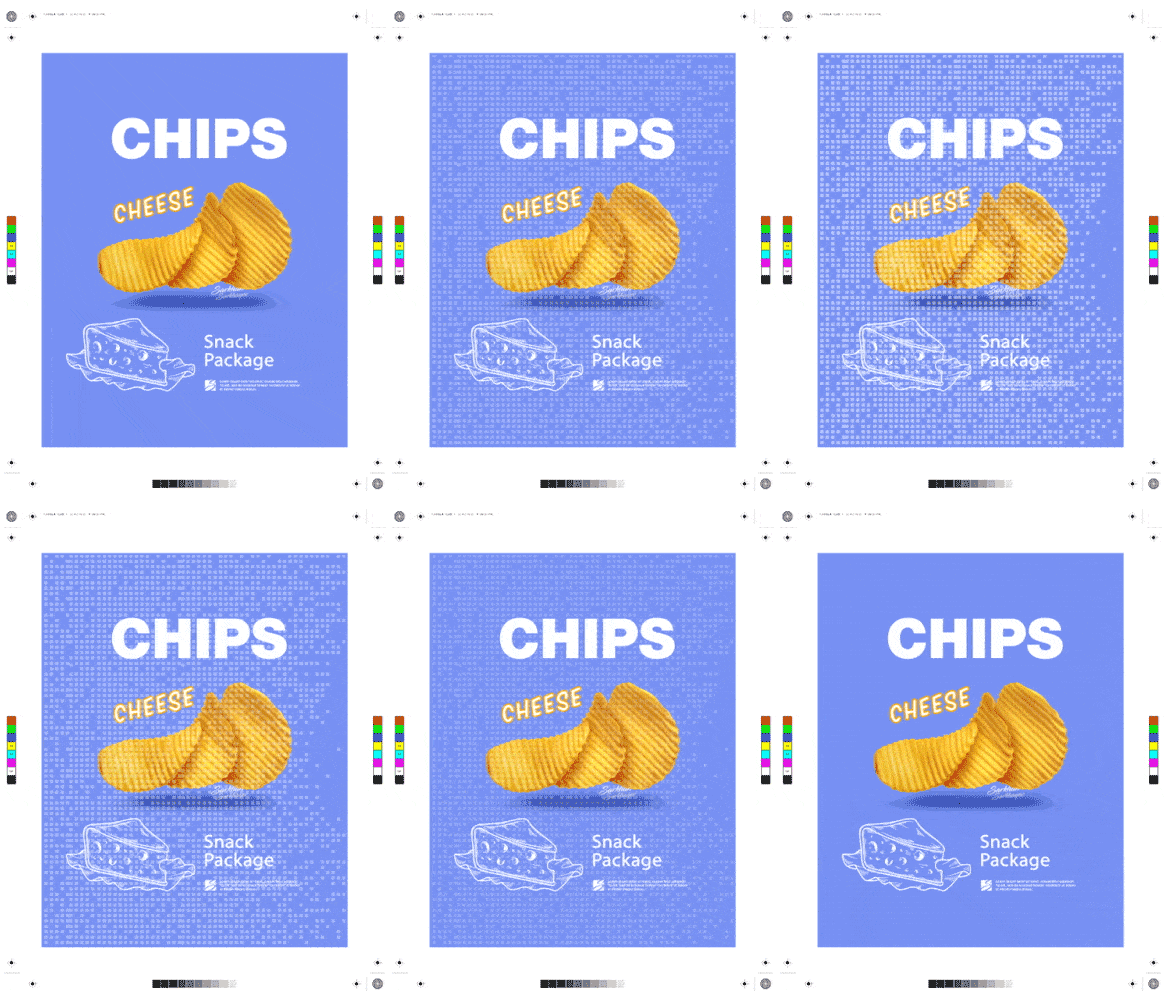
Move beyond fragile holograms and slow lab tests. Our AI-powered product authentication provides instant, verifiable proof of authenticity using any smartphone, without changing your manufacturing process.

Ennoventure's patented brand protection technology embeds invisible cryptographic trust directly into products, enabling real-time authentication across 160+ countries.

Product Authentication in Action

Product Authentication in Action

See how our solution is applied to solve specific challenges across industries.

See how our solution is applied to solve specific challenges across industries.

FeatureEnnoventure AIOvertQR / NFC
Speed✓ < 3 sec✗ Visual✓ < 5 sec
Security✓ Forensic✗ Copyable✗ Clonable
Implementation✓ Non-Invasive✗ Packaging Change✗ Packaging Change
Scalability✓ Infinite✗ Expensive✗ Tag dependent
Data✓ Real-time✗ None✓ Basic

How Our Product Authentication Works

How Our Product Authentication Works


A simple, secure, and seamless process.

A simple, secure, and seamless process.

Signature Creation

Signature Creation

Unique cryptographic signature embedded into your existing design.

Unique cryptographic signature embedded into your existing design.

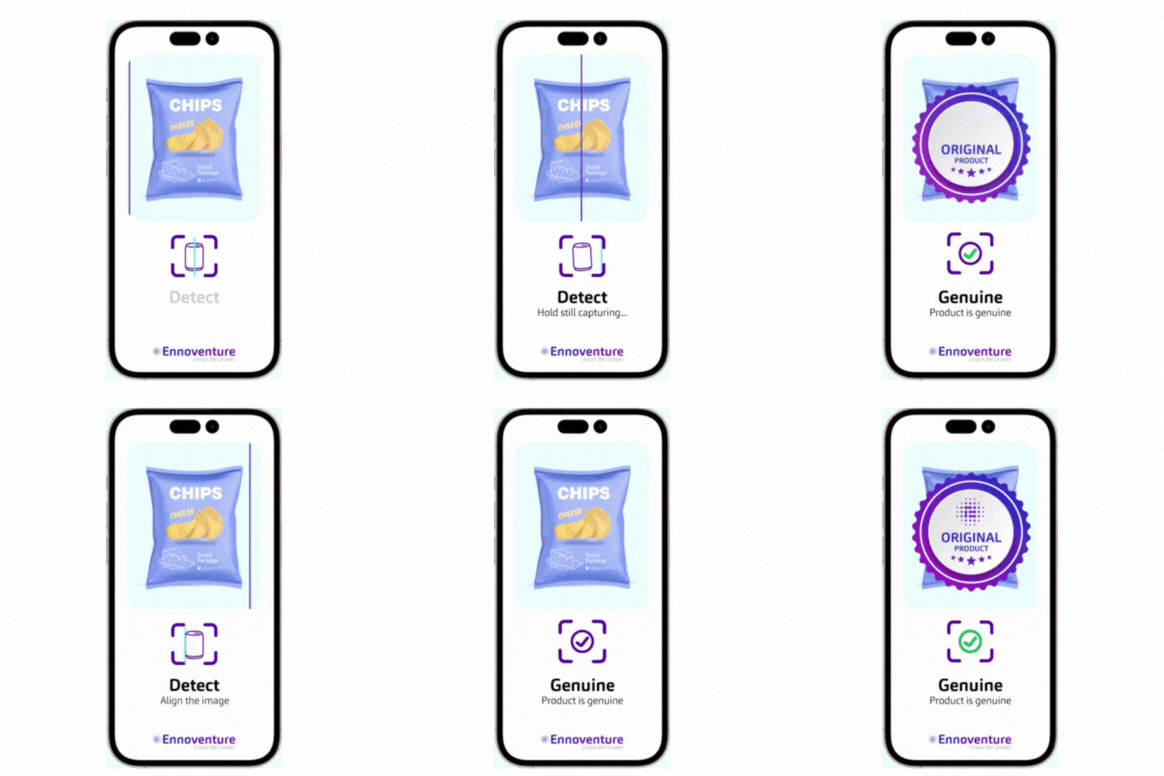
Mobile Scanning

Mobile Scanning

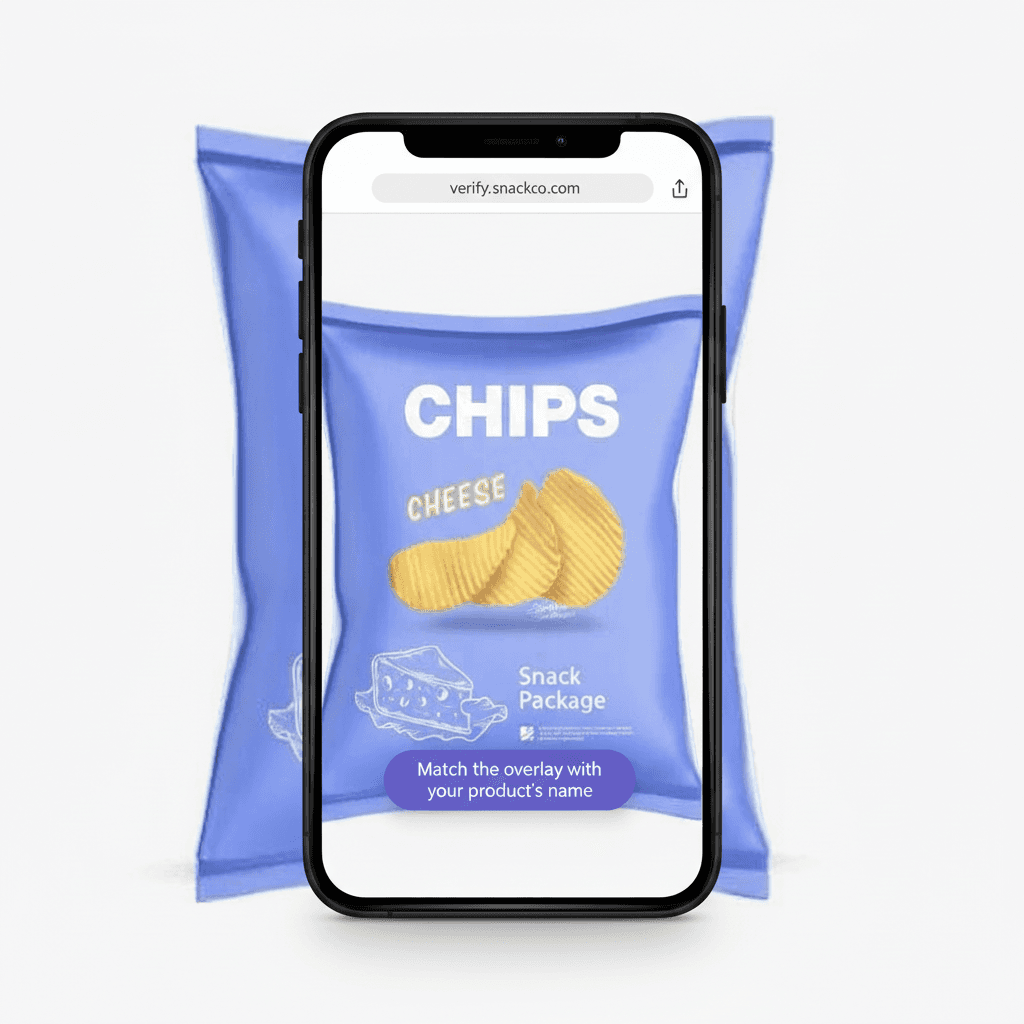
Scan using a normal smartphone camera.
AI Verification

AI Verification

Cloud AI verifies authenticity instantly.

Cloud AI verifies authenticity instantly.

Built on cutting-edge technology

Technical Features for Total Security

Technical Features for Total Security

Feature icon

Cryptographic Uniqueness

Advanced encryption ensures each token is mathematically unique and impossible to replicate.

Feature icon

AI-Powered Engine

Machine learning algorithms continuously optimize performance and adapt to new patterns.

Feature icon

Seamless Integration

Drop-in compatibility with existing systems through our comprehensive API suite.

Feature icon

Lightning Fast

Sub-millisecond response times with 99.9% uptime guarantee for mission-critical applications.

See how our solution is applied to solve specific challenges across industries.

See how our solution is applied to solve specific challenges across industries.

Product Authentication in Action

Product Authentication in Action

Pharmaceuticals

Verify drugs at point of dispense to combat counterfeit medicine and ensure patient safety.

Consumer Goods

Protect your brand from look-alike products and track diversion in complex supply chains.

Automotive

Prevent counterfeit parts from entering your supply chain and endangering consumers.

Electronics

Ensure the integrity of components and finished goods, protecting your reputation for quality.

Luxury Goods

Provide customers and retailers with an instant way to verify the authenticity of high-value items.

Specialty Chemicals

Protect your formulations and prevent counterfeit agricultural products from reaching the market.

Answers to Your Top Questions

Answers to Your Top Questions

From setup steps to feature details, our FAQs cover everything you need to know.

From setup steps to feature details, our FAQs cover everything you need to know.

Can a product have both tamper evidence and authentication?

Yes, and for brands facing multiple threat types, both are appropriate. Tamper evidence addresses retail interference and regulatory compliance; authentication addresses manufactured counterfeiting and diversion. They solve different problems and coexist on the same pack without interference.

Is a QR code product authentication?

A standard QR code is not authentication — it is a link to a URL. Anyone can generate a QR code linking to any page, including a fake verification page. A serialised QR code with a unique code per pack gets closer, but serial numbers can be copied from genuine packs onto fakes. Cryptographic authentication embedded in the pack — not printed on its surface as a scannable code — is what makes verification forgery-proof.

Does pharmaceutical serialisation provide product authentication?

Serialisation under FMD and DSCSA verifies the serial number is valid and was assigned to a product of that type. It does not verify the physical pack is genuine — only that the credential on it is legitimate. A valid serial number can be copied onto a falsified pack. Physical authentication is a separate layer that addresses this gap.

How does invisible authentication work?

A cryptographic signature is generated using a private key and embedded in the pack artwork during the print process — not as a separate component but as part of the image. A smartphone camera reads the embedded signature and a server verifies it against the expected value generated by the corresponding public key. If the signature is valid, the pack is genuine. If not — because the pack is a fake without access to the private key — the verification fails. There is nothing on the surface to copy because the signature is not visible.

What is the cost difference between tamper evidence and authentication?

Tamper evidence costs per unit — label material, adhesive, application. At high volumes, standard VOID labels are very cost-effective. Authentication using embedded invisible signatures costs at the artwork level — it is an artwork change that applies to an entire print run, not a per-unit addition. At FMCG scale, this makes cryptographic authentication cost-competitive with physical label additions while providing significantly greater security.