Why Brand Protection Is Critical for Your Business And What to Do About It

Brands have never been stronger. That's the thing nobody talks about. They've also never been more vulnerable. By 2030 we're looking at roughly $1.79 trillion just in new fake products entering circulation. One in every 20 dollars spent on products globally could be going to counterfeits.
The money part matters. But it's honestly the least interesting part of this problem.
The real issue is trust. Consumer trust. Once it's gone, it doesn't come back easily. Someone buys a counterfeit thinking it's real. They find out it's fake. They don't blame the counterfeiter. They blame your brand. That person doesn't just stop buying from you. They tell people. A lot of people. Studies show one bad experience gets shared with 9 to 15 people. That's just word of mouth. Then there's online reviews. Social media. That damage compounds fast.
What's Actually Happening in the Market
The IP fraud market was $8.12 billion in 2024. It's heading toward $22 billion by 2030. Growing at 17.45% a year. That's not slow growth. That's an acceleration problem.
Counterfeiting, IP theft, brand piracy. These aren't new problems. But they're accelerating because the tools for making counterfeits are better now. Generative AI can study authentic packaging designs and help replicate them. E-commerce platforms let counterfeiters reach global markets in days. Traditional security features like holograms and microtext? Those got figured out years ago. Counterfeiters can replicate them now. It takes investment and resources but it's doable.
The bigger issue is supply chains. Globalization opened markets but it also opened vulnerabilities. Unauthorized distributors. Gray market channels. Overseas partners who cut corners. The fashion industry alone loses over $450 billion annually to counterfeiting through supply chain infiltration. One compromised supplier can flood global markets. One partner that isn't properly vetted means your products are now vulnerable.
Supply chain breaches jumped 26% year over year in 2023. These aren't just IT security issues. These are operational vulnerabilities that let counterfeiters get access to your materials, your processes, your distribution. And when that happens, real customers get harmed.
Why This Actually Matters To Your Business
Revenue loss is obvious. But it goes deeper than that.
Customer lifetime value. That's the real metric. When someone buys a counterfeit and discovers it, they don't just not buy from you again. They stop. Completely. 26% of consumers abandon a brand entirely after a counterfeit experience. Another 34% avoid your official channels. That's not one lost sale. That's all future sales from that customer. All their referrals. All their potential upsells. Gone.
Legal exposure is real too. Counterfeit drugs kill people. Fake auto parts cause accidents. Counterfeit electronics cause fires. The authentic brand gets held responsible. Not just by customers suing you. By regulators. By law enforcement. The liability doesn't sit with the counterfeiter. It sits with you.
And operationally, managing this across global supply chains is complex. Manufacturing, distribution, retail, e-commerce, enforcement agencies. All of it needs to connect. That complexity is substantial. But the cost of not managing it is orders of magnitude higher.
What Actually Works
Traditional IP defense through lawyers and licensing is necessary. But it's reactive. By the time legal gets involved, damage is done.
The brands actually winning this battle deploy something different. They detect counterfeits before they establish distribution. They monitor supply chains proactively. They use technology that's invisible to counterfeiters. Not visible security features like holograms that can be studied and replicated. Something counterfeiters can't see. Can't measure. Can't analyze.
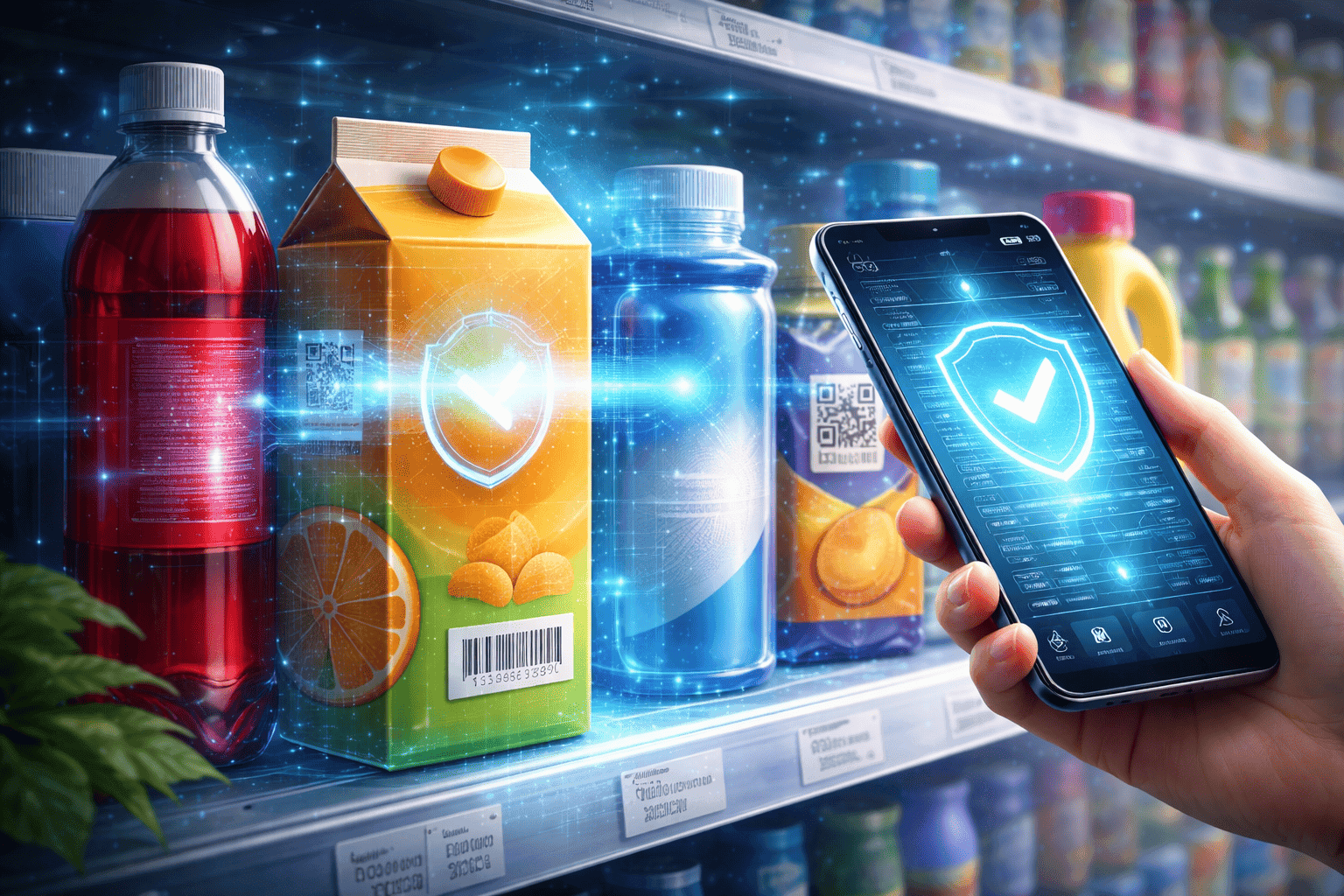
Invisible cryptographic signatures embedded directly into packaging artwork work because counterfeiters don't know they're there. No amount of studying the package reveals them. You can't replicate what you can't see. The authentication happens server-side against brand-owned databases. Even if a counterfeiter perfectly replicates the packaging design using generative AI, the underlying cryptographic verification fails.
From an operational standpoint, this gets embedded during normal prepress. No new equipment. No special inks. No line changes. Files go to production unchanged. You can pilot this in days. Scale it without disrupting operations.
Every scan generates intelligence. Device type. Location. Timestamp. Verification result. That data shows exactly where counterfeits are emerging geographically. Which channels are compromised. Which retailers are selling fakes. Which markets need more monitoring. That intelligence transforms brand protection from reactive guessing to targeted, strategic response.
The Numbers Actually Make Sense
RFID costs between $0.05 and $0.30 per unit. Plus you need reader infrastructure. Holograms add substantial per-unit cost across millions of packages. Invisible signatures cost a fraction of that. Minimal incremental print cost. No hardware. The main investment is platform setup and dashboard configuration. Mid-market brands typically invest low six figures for global deployment.
Deployment happens fast. Holograms require production line modifications. Equipment changes. Material sourcing. Takes quarters. Invisible signatures embed in artwork during standard prepress. Pilots launch in days. Scale without operational disruption.
ROI timeline is 12 to 18 months. Revenue recovery comes from reduced counterfeit penetration on priority SKUs. Legal costs drop when takedowns happen faster with accurate intelligence. Brand equity protection compounds over time as consumer trust strengthens. Conservative estimates show 15 to 20% net benefit within 18 months just from counterfeit reduction.
When you factor in the cost of not doing this, the business case becomes obvious. 26% fewer customers willing to buy from official channels post-counterfeit means significant revenue loss. 34% increase in negative word-of-mouth multiplies that damage. These costs compound over years.
Frequently Asked Questions
Why is this suddenly urgent now?
Counterfeiting is accelerating. AI makes replication easier. E-commerce enables rapid scaling. Consumers shopping online see fake listings next to authentic products. Counterfeiters establish distribution faster than brands can respond. The window for deploying effective protection keeps shrinking.
What's the difference between brand protection and legal teams?
Legal enforces after the fact. Brand protection prevents before it happens. Proactive monitoring. Supply chain security. Rapid response. Legal is reactive. Brand protection is proactive. Best approach combines both.
How does supply chain security connect to this?
Your supply chain is your vulnerability. Unvetted suppliers, unmonitored distribution partners, shortcuts by manufacturing. That's how counterfeiters get access to your processes and materials. Brand protection requires integrated supply chain visibility and partner accountability.
Is this affordable for smaller brands?
Yes. Invisible cryptographic signatures with cloud analytics deliver enterprise protection without enterprise costs. Scales from startups protecting one or two SKUs to global companies with hundreds of SKUs across dozens of countries.
What metrics matter for measuring success?
Track counterfeit incident rate per 10,000 units by SKU and region. Measure time from detection to takedown. Monitor customer trust before and after deployment. Track revenue recapture from reduced counterfeits. Measure legal cost reduction from faster enforcement. These metrics connect investment directly to business outcomes.
Why Ennoventure
We pioneered invisible cryptographic signature technology. Over 1 billion packages deployed since 2009 across FMCG, automotive, pharmaceuticals, consumer electronics. The platform combines AI-driven anomaly detection with invisible signatures and real-time dashboards. No operational disruption.
Signatures embed during artwork prepress. Smartphones verify instantly. Dashboards update in real time. Brands see counterfeit reduction and revenue recovery within months. Faster and simpler than complex approaches requiring specialized equipment or lab analysis.
Invisible signatures stay effective as counterfeiting advances. Generative AI lets counterfeiters replicate packaging perfectly. They cannot replicate cryptographic signatures. Security is mathematical, not visual. Your initial investment continues protecting your brand as counterfeiting techniques evolve.
Act Now
The cost of inadequate brand protection exceeds the cost of deploying it. Every month without comprehensive protection is a month counterfeiters use to establish channels and erode consumer trust.
Start with high-risk, high-value SKUs where counterfeit exposure is documented. Deploy invisible signatures without process changes. Launch pilots within 90 days. Measure results. Scale across your portfolio.
Contact Ennoventure to design your brand protection roadmap and operationalize defense across supply chains and markets.
FAQs
What is the difference between Digital Brand Protection and Invisible Authentication?
Digital Brand Protection covers online surfaces — marketplaces, social platforms, forums, and news. Invisible Authentication secures the physical product and its packaging. Together they form a complete protection stack: digital intelligence flags threats, and physical authentication provides legal-grade proof.
Do I need to use both Online Brand Protection and Chirper?
Both can be used independently or as a combined Digital Brand Protection suite. Brands typically start with the surface where their risk is highest and expand as needs grow.
Which marketplaces and social platforms are covered?
Online Brand Protection covers 50+ global marketplaces including Amazon, Flipkart, Alibaba, AliExpress, Tmall, Walmart, Shopee, Lazada, Mercado Libre, JD.com, and eBay. Chirper monitors Reddit, X, news sites, forums, review sites, trade publications, and brand communities.
How quickly can threats be detected and acted on?
Marketplace takedowns are initiated within 24 hours of threat classification. Social conversation alerts arrive in under one hour from when a relevant discussion begins.
Does this require integration with our internal systems?
No technical integration is required. You provide your brand keywords, product names, and target marketplaces. Everything runs through a cloud dashboard.
Which industries does Digital Brand Protection serve?
Digital Brand Protection is built for pharmaceuticals, consumer goods, luxury, FMCG, automotive aftermarket, electronics, and specialty chemicals — industries where pricing discipline, authenticity, and brand trust are mission-critical.