Brand Protection Services | Digital Brand Protection Vendors Compared
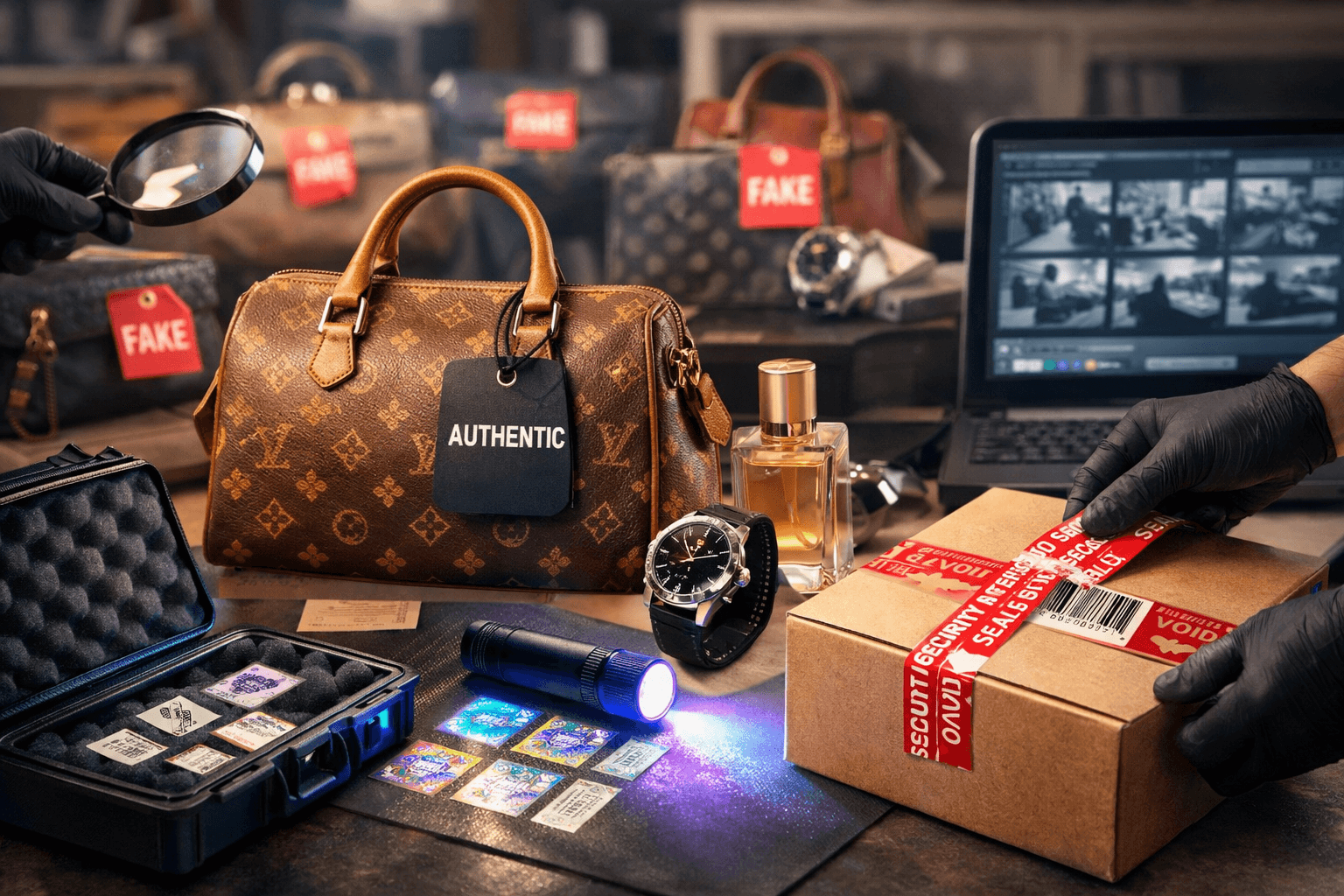
Your Brand Is Being Exploited Right Now
If you sell products or have any online presence, counterfeiters, unauthorized resellers, and IP thieves are already targeting you. The question is not whether you need brand protection services — it is which digital brand protection vendor can actually stop the damage before your revenue and reputation take a hit.
This guide is for procurement teams, brand managers, and IP counsel evaluating brand protection services for the first time — or looking to replace a vendor that is underperforming.
What Brand Protection Services Actually Do
Brand protection services combine continuous monitoring, AI-powered detection, and enforcement action to find and eliminate brand abuse across:
E-commerce marketplaces (Amazon, Alibaba, eBay, Lazada, Flipkart, Shopee)
Social media platforms (Instagram, Facebook, TikTok, YouTube, WhatsApp)
Search engines (Google Shopping ads with your brand name, impersonation ads)
App stores (fake apps using your brand identity)
The open web (counterfeit websites, phishing pages, grey market sellers)
The core workflow of any brand protection service is: detect → validate → enforce → report.
What separates premium digital brand protection vendors from basic monitoring tools is enforcement speed and accuracy. Detection without action is just a dashboard of problems.
The 4 Services Every Brand Protection Vendor Should Offer
1. Continuous Marketplace Monitoring
Your vendor should scan millions of listings daily — not weekly — across all major marketplaces. Listings that violate your IP appear within hours; a weekly scan means days of lost sales and consumer harm.
Key questions to ask:
How many marketplace integrations do you have?
What is your average time from listing detection to takedown?
Do you cover regional marketplaces like Meesho, JD.com, or Tokopedia?
2. AI-Powered Infringement Validation
Not every flagged listing is a violation. The best brand protection vendors use machine learning to distinguish between authorised sellers, grey market goods, and actual counterfeits — so you are not spending enforcement budget on false positives.
Look for a precision rate above 90% and human-in-the-loop review for edge cases.
3. Automated and Manual Takedown Execution
Direct enforcement relationships with platform trust-and-safety teams are what make takedowns fast. A vendor with established escalation paths at Amazon, Alibaba, and Meta can get a takedown completed in 24–72 hours. A vendor without those relationships files a standard report and waits in a queue.
Ask specifically: Do you have platform partner status with Amazon Brand Registry, Alibaba IP Protection, and Meta's IP reporting portal?
4. Reporting and ROI Quantification
Brand protection services cost money. Your CFO will ask what you are getting for it. The best vendors provide monthly reports showing:
Infringing listings removed
Estimated revenue protected (based on counterfeit pricing and volume)
Repeat seller identification
Enforcement success rate by platform
If a vendor cannot quantify your return, that is a red flag.
Digital Brand Protection: What the Threat Surface Actually Looks Like
Traditional brand protection was physical — factory inspections, customs seizures, retail audits. Digital brand protection covers the online threat surface:
Threat Type | Examples | Why It Hurts |
|---|---|---|
Counterfeit listings | Fake products with your brand name on Amazon | Lost sales, product liability risk |
Unauthorized resellers | Grey market goods sold below MAP | Price erosion, warranty issues |
Social media impersonation | Fake Instagram accounts, fake Facebook pages | Consumer fraud, brand dilution |
Paid search abuse | Competitors bidding on your brand terms | Higher CPC, traffic diversion |
App store fakes | Fraudulent apps using your logo and name | Data theft, consumer harm |
Phishing sites | Fake websites that mimic your domain | Credential theft, chargebacks |
A digital brand protection vendor that only monitors one or two of these channels is leaving you exposed. Ask for a threat coverage matrix before signing any contract.
Online Brand Protection Services: What's Typically Included
When vendors talk about online brand protection services, the term covers a wide spectrum — from basic keyword monitoring tools to fully managed enforcement programs. Understanding what you are actually buying prevents overpaying for features you don't need and underpaying for enforcement you do.
The most common online brand protection service tiers look like this:
Monitoring-only tier — Automated scanning of marketplaces and social platforms. Flags potential violations. No enforcement. Best for brands just starting to quantify their exposure.
Monitoring + self-service enforcement — Detection plus tools that let your in-house team submit takedowns directly. Reduces manual work but still requires internal legal or brand resources to action.
Fully managed online brand protection services — The vendor's team handles detection, validation, and takedown execution on your behalf. Higher cost, but faster results and no demand on internal headcount. This is the model most enterprise brands use.
Authentication-integrated services — Online monitoring combined with physical product authentication. Detects counterfeits entering digital channels and traces them back to the supply chain point of origin. The most comprehensive model available.
When comparing online brand protection services, match the service tier to your internal capacity. If your team has no dedicated IP enforcement resource, a monitoring-only tier will produce a growing list of flagged violations and no action. Fully managed services cost more up front but produce faster ROI because enforcement actually happens.
How to Evaluate Brand Protection Vendors: A Practical Framework
When you get on a call with a brand protection vendor, run them through this framework:
Coverage
How many total platforms do you monitor?
Do you cover the markets where our products sell (US, EU, India, Southeast Asia)?
What is your average detection lag — hours or days?
Technology
Is your detection AI-based or rules-based?
What is your false positive rate?
Can we integrate your data with our internal IP management system?
Enforcement
Do you handle takedowns or just flag violations for us to act on?
What is your average takedown time by platform?
Do you have direct relationships with platform trust-and-safety teams?
Pricing
Is pricing per enforcement action, per marketplace, or flat fee?
What is included in the base plan vs. add-ons?
Is there a minimum contract length?
Reporting
Can we see a sample monthly report?
Do you provide API access to enforcement data?
How do you measure and report ROI?
Online Brand Protection Companies: What the Market Looks Like in 2026
The online brand protection companies market has consolidated significantly over the past five years. Understanding the vendor landscape helps you ask better questions and spot positioning spin during sales calls.
Today's online brand protection companies generally fall into four categories:
Pure-play digital enforcement platforms (Red Points, BrandShield, Corsearch) that focus exclusively on online IP monitoring and marketplace takedowns. Strong on detection breadth, but typically limited on physical product authentication.
Authentication-first platforms (Ennoventure) that combine physical product authentication — embedded in packaging — with online brand protection monitoring. Better suited for brands whose primary threat is physical counterfeit goods entering digital channels.
Trademark and IP management suites that bundle online brand protection as one module within broader legal workflow software. Coverage tends to be narrower; enforcement is often manual.
Generalist cybersecurity vendors that have added brand monitoring to their threat intelligence products. Useful for companies where brand abuse overlaps with cybersecurity threats (phishing, credential theft), but typically not the right fit for physical goods counterfeiting.
When shortlisting online brand protection companies, the most important question is not which has the longest feature list — it is which has the deepest enforcement capability in the specific channels where your brand is being abused. A platform that dominates Amazon takedowns but lacks regional marketplace coverage (Meesho, Tokopedia, MercadoLibre) is solving only part of your problem.
Brand Protection Agency vs. Brand Protection Platform: What's the Right Model?
Some brands engage a brand protection agency — a specialist consultancy or IP law firm that manages enforcement campaigns on their behalf. Others invest in a dedicated brand protection technology platform. Most enterprise brands eventually use both. Knowing the difference prevents you from buying the wrong solution first.
| Brand Protection Agency | Brand Protection Platform |
|---|---|---|
Primary value | Legal strategy, complex enforcement cases, litigation support | Continuous monitoring, automated takedowns, data and reporting at scale |
Enforcement speed | Slower — suited for coordinated campaigns and legal escalations | Fast — detection and takedown within hours to days |
Cost model | Hourly billing or retainer (legal rates) | SaaS subscription or per-enforcement pricing |
Best suited for | High-value IP disputes, cross-border litigation, seizure operations | High-volume, ongoing online enforcement that human teams cannot handle at cost |
A brand protection agency is the right choice when you have a complex legal dispute requiring jurisdiction-specific expertise, court filings, or coordinated customs action. A brand protection platform is the right choice when you need continuous online monitoring and enforcement at a volume and speed that legal teams cannot replicate.
The most effective brand protection programs pair a platform for day-to-day enforcement with a brand protection agency for escalated legal action — when platforms fail to respond or when criminal operators require formal legal pressure to remove.
What Makes Ennoventure Different as a Brand Protection Service
Ennoventure's approach to digital brand protection is built on one principle: you cannot protect a brand you cannot see in real time.
Our platform provides:
Real-time marketplace surveillance across 200+ platforms globally
AI-driven counterfeit detection trained on millions of IP violation patterns
Automated takedown workflows with direct integrations to platform enforcement APIs
Authenticated product tracing from manufacturer to end consumer
Transparent ROI reporting with revenue-at-risk quantification in every report
We work with brand owners in FMCG, pharmaceuticals, consumer electronics, fashion, and spirits — sectors where counterfeiting causes the most revenue and safety damage.
Choosing the Right Brand Protection Partner
The brand protection vendors market has consolidated in the past two years. Several legacy vendors rely on manual monitoring teams with slow turnaround. A new generation of AI-native platforms — including Ennoventure — can detect and initiate takedowns in hours rather than weeks.
Before signing with any brand protection service, request:
A pilot programme covering your top 3 markets for 30 days
A real takedown case study from a client in your industry
A sample dashboard screenshot showing detection latency and enforcement status
Reference contacts at two existing enterprise clients
If a vendor hesitates on any of these, keep shopping.
Your brand is worth more than the cost of protecting it. The only question is which digital brand protection vendor you trust to do it.
Ennoventure is a leading brand protection platform trusted by global brands to detect and eliminate counterfeiting, IP abuse, and grey market activity at scale.
FAQs
What is the difference between Digital Brand Protection and Invisible Authentication?
Digital Brand Protection covers online surfaces — marketplaces, social platforms, forums, and news. Invisible Authentication secures the physical product and its packaging. Together they form a complete protection stack: digital intelligence flags threats, and physical authentication provides legal-grade proof.
Do I need to use both Online Brand Protection and Chirper?
Both can be used independently or as a combined Digital Brand Protection suite. Brands typically start with the surface where their risk is highest and expand as needs grow.
Which marketplaces and social platforms are covered?
Online Brand Protection covers 50+ global marketplaces including Amazon, Flipkart, Alibaba, AliExpress, Tmall, Walmart, Shopee, Lazada, Mercado Libre, JD.com, and eBay. Chirper monitors Reddit, X, news sites, forums, review sites, trade publications, and brand communities.
How quickly can threats be detected and acted on?
Marketplace takedowns are initiated within 24 hours of threat classification. Social conversation alerts arrive in under one hour from when a relevant discussion begins.
Does this require integration with our internal systems?
No technical integration is required. You provide your brand keywords, product names, and target marketplaces. Everything runs through a cloud dashboard.
Which industries does Digital Brand Protection serve?
Digital Brand Protection is built for pharmaceuticals, consumer goods, luxury, FMCG, automotive aftermarket, electronics, and specialty chemicals — industries where pricing discipline, authenticity, and brand trust are mission-critical.