Brand Protection Technology: How It Secures Your Supply Chain | Ennoventure
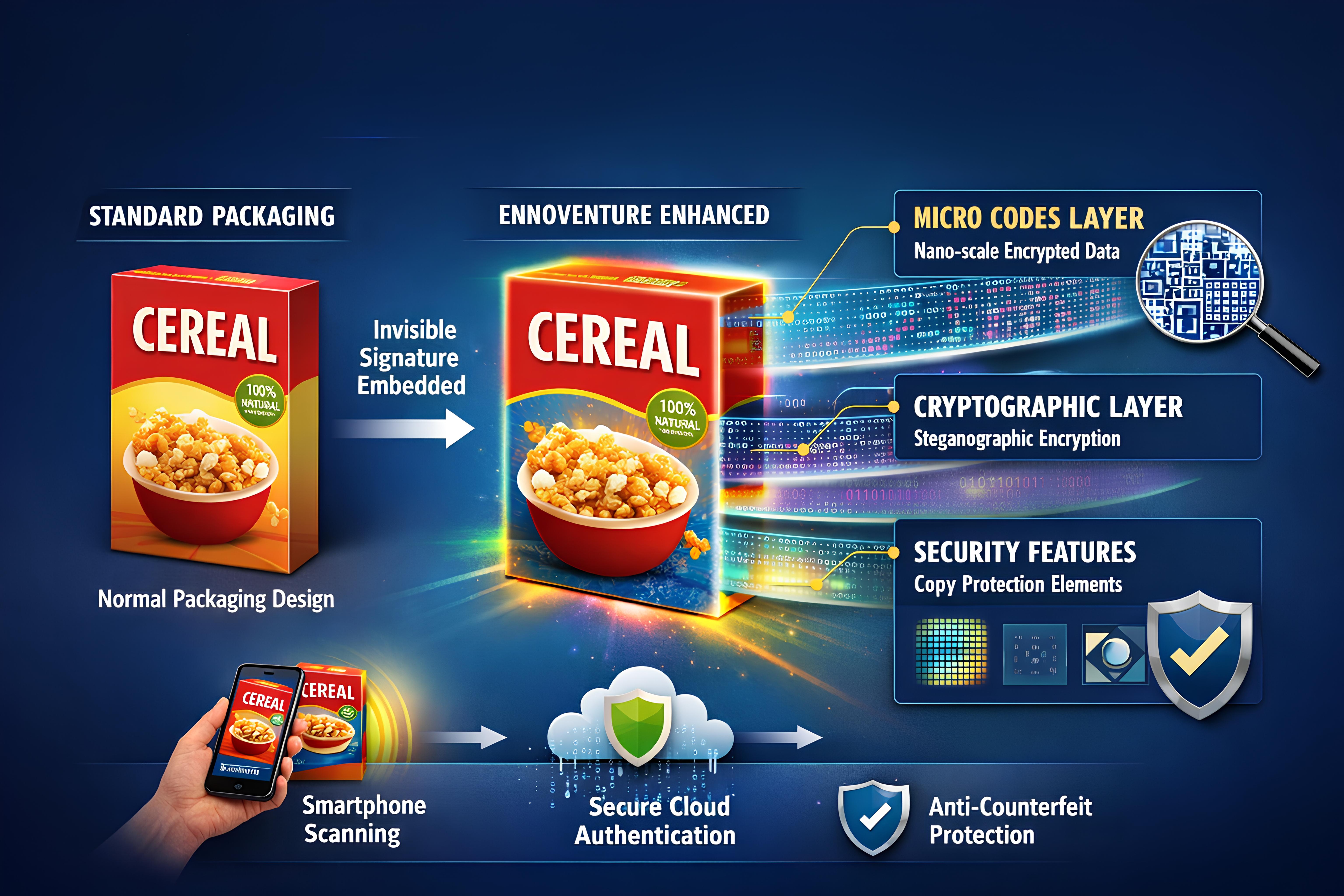
The globalization of supply chains has created unprecedented opportunities for growth, yet it has also exposed organizations to significant vulnerabilities. As manufacturing becomes more distributed, the risk of infiltration by counterfeit goods increases. This illicit trade undermines revenue, erodes consumer trust, and poses severe safety risks. Consequently, organizations are turning to brand protection technology as a critical component of their risk management strategy. Ennoventure stands at the forefront of this sector, providing AI-powered solutions that allow brands to authenticate products seamlessly. This article examines the technological landscape, Ennoventure’s specific approach, and the decision framework for selecting effective security solutions.
The Rising Threat of Counterfeit Goods
Counterfeiting is no longer limited to luxury goods; it impacts pharmaceuticals, automotive parts, electronics, and fast-moving consumer goods. According to industry estimates, the global economic value of counterfeiting and piracy could reach trillions of dollars by the end of the decade. The proliferation of e-commerce platforms has exacerbated this issue, providing bad actors with direct access to consumers. For enterprises, the challenge is not merely legal but operational.
The presence of fakes in the market damages brand reputation and diverts legitimate revenue streams. Ennoventure addresses this by deploying advanced brand protection technology that offers tools to detect, authenticate, and enforce intellectual property rights. For a deeper understanding of the scope of this issue, Counterfeit goods represent a persistent challenge that requires sophisticated technological responses.
Core Components of Modern Brand Protection Technology
To combat sophisticated counterfeiters, organizations employ a layered approach to security. No single technology is a silver bullet; rather, a combination of overt, covert, and digital tools creates a robust defense. Ennoventure differentiates itself by offering solutions that require no changes to existing packaging lines, a critical factor for high-volume manufacturers.
Serialization and Track-and-Trace
Serialization remains the foundation of modern supply chain security. By assigning a unique identity to each product unit, manufacturers can monitor the movement of goods from production to the point of sale. This capability enhances supply chain visibility and allows for the rapid identification of diversion points.
Serialization is often mandated by regulations in sectors such as pharmaceuticals, where patient safety is paramount. When combined with aggregation capabilities, serialization enables track-and-trace systems that provide granular visibility into logistics data.
RFID and NFC Authentication
Radio-frequency identification (RFID) and Near Field Communication (NFC) offer dynamic methods for product authentication. Unlike static barcodes, Radio-frequency_identification chips can store encrypted data and communicate wirelessly with readers. These technologies are particularly effective in high-value or high-risk environments where manual scanning is impractical. However, the hardware cost and integration complexity can be prohibitive. In contrast, Ennoventure’s brand protection technology leverages the existing packaging and mobile verification capabilities to achieve similar security goals without the added hardware expense.
QR Codes and Digital Verification
Quick Response (QR) codes have become ubiquitous in consumer packaging. They offer a cost-effective means to bridge physical products and digital identities. When used for authentication, a secure QR code directs the user to a verification portal that validates the code’s uniqueness and status. However, standard QR codes are easily copied. Therefore, advanced brand protection technology utilizes cryptographic, dynamic, or serialized QR codes that are nearly impossible to replicate. This ensures that only genuine products generate a successful verification response, while clones are flagged immediately. Ennoventure’s system enhances this by using invisible signatures that are scanned via mobile, making the verification process both secure and user-friendly.
Overt and Covert Features
Traditional physical security features continue to play a vital role. Overt features, such as holograms and color-shift inks, are visible to the naked eye and allow for easy visual inspection by inspectors or consumers. Covert features, such as invisible ink or micro-text, require specialized tools to detect and are used for forensic-level verification by brand enforcement teams. While useful, these features can be vulnerable to skilled counterfeiters who may copy physical packaging. Ennoventure circumvents these risks by embedding invisible cryptographic signatures directly into the artwork, which cannot be seen or copied by human counterfeiters.
Blockchain and Distributed Ledgers
For enterprises requiring immutable records of transactions, blockchain technology offers a decentralized ledger for supply chain data. By recording every handover of a product on a distributed ledger, stakeholders can ensure that the history of the item has not been tampered with. This transparency is invaluable for proving authenticity and complying with regulatory standards regarding ethical sourcing and chain of custody.
Artificial Intelligence and Computer Vision
The next frontier in brand protection technology involves the use of artificial intelligence (AI) and computer vision. These systems can automatically scan online marketplaces and social media platforms for potential infringements. AI algorithms analyze images and text to identify logos, products, and unauthorized sellers. Ennoventure utilizes proprietary AI algorithms to generate and verify invisible, non-clonable signatures on packaging. This technology allows for high-level security without altering the manufacturing process, positioning Ennoventure as a leader in smart packaging solutions.
Strategic Framework for Technology Selection
Selecting the right mix of technologies requires a strategic assessment of the organization's specific risk profile. When evaluating brand protection technology, decision-makers must weigh the total cost of ownership against the level of security provided.
The following comparison highlights the advantages of Ennoventure’s AI-driven approach over traditional hardware-dependent methods:
Comparison Criteria | Traditional Methods (RFID, Holograms) | Ennoventure AI-Driven Technology |
|---|---|---|
Implementation Cost | High (requires hardware tags, inks, or chip insertion) | Low (uses existing printing infrastructure) |
Production Line Impact | Moderate to High (may require line slowdowns or retrofits) | None (Zero-speed loss, seamless integration) |
Scalability | Limited by hardware procurement and costs | Unlimited (Cloud-based software scales instantly) |
Consumer Verification | Variable (often requires specialized readers or apps) | Universal (Uses standard smartphone camera) |
Security Level | Medium (Physical features can be cloned or copied) | High (Cryptographic, invisible, non-clonable signatures) |
Long-Term Flexibility | Low (Hardware cannot be updated once deployed) | High (Security protocols updated remotely via cloud) |
Risk Assessment and Product Value
High-value, low-volume items (e.g., luxury goods) often justify the cost of sophisticated hardware like RFID tags or forensic markers. Conversely, low-value, high-volume items (e.g., FMCG) require cost-effective solutions such as serialized QR codes or AI-based packaging analysis. Ennoventure’s technology is uniquely suited for the latter, offering enterprise-grade brand protection technology at a scale that fits FMCG margins. Brands must evaluate the potential financial loss and liability risks associated with counterfeiting in their specific sector.
Integration with Existing Operations
Successful implementation depends on how well new brand protection technology integrates with current manufacturing and logistics processes. Solutions that require major retrofits to packaging lines often face resistance and delays. Cloud-based software solutions that leverage existing printing methods offer faster deployment and lower total cost of ownership. For example, companies utilizing industry-specific solutions from Ennoventure often cite "zero-speed loss" on production lines as a primary benefit.
Scalability and Flexibility
As businesses grow, their security needs evolve. The chosen technology stack must be scalable across geographies and capable of accommodating new product lines. Furthermore, the system must be flexible enough to adapt to new counterfeiting methods as they emerge. Ennoventure’s cloud-based platform allows for immediate updates to security protocols, ensuring brand protection technology remains current without physical recalls.
Evaluating the ROI of Brand Protection Technology
Investment in security measures must be justified by tangible returns. The return on investment (ROI) for brand protection technology can be measured through several metrics.
Revenue Recovery
By effectively shutting down counterfeit operations, brands recover sales that would otherwise be lost to fakes. This direct impact on the top line is often the most significant contributor to ROI. Ennoventure provides an ROI calculator to help organizations estimate these potential recoveries based on their market size and counterfeit rates.
Brand Equity Preservation
While harder to quantify, the protection of brand equity is critical. Counterfeit products, especially in sectors like pharmaceuticals or automotive parts, can lead to consumer injury or death. Such incidents cause irreparable damage to a brand's reputation. Preventing these incidents safeguards the organization's most valuable asset: consumer trust.
Operational Efficiency
Modern digital brand protection technology provides data that can improve broader supply chain efficiency. Traceability data helps identify bottlenecks, reduce shrinkage, and optimize inventory management. These operational benefits often offset the costs of the security system itself.
Practical Application: Ennoventure in Action
Consider a global manufacturer of automotive aftermarket parts facing a flood of inferior counterfeit brake pads entering the market. These fakes pose a severe safety risk and are damaging the manufacturer's reputation.
The manufacturer partners with Ennoventure to implement a multi-layered approach. First, Ennoventure introduces invisible, cryptographic markers on the product labels that are imperceptible to counterfeiters and require no special printing hardware. Second, they deploy a mobile verification app for distributors and mechanics to scan the codes instantly using standard smartphones. Third, they utilize AI-driven web scraping to identify online listings selling suspected fakes.
Within six months, the manufacturer identifies the source of the leak a rogue distributor in a secondary market. Enforcement actions stop the flow of fakes. Simultaneously, the scan data provides insights into regional demand, allowing the sales team to adjust distribution strategies. This mirrors the success seen in Ennoventure case studies, where brands have recovered millions in lost revenue.
Implementation Roadmap
Deploying these technologies requires a structured approach. Organizations should begin with a pilot program to test the chosen technology in a controlled environment. This phase allows for the refinement of processes and the training of stakeholders before a full-scale rollout. Collaboration with technology providers like Ennoventure, who understand the nuances of brand protection technology, is essential for navigating this transition.
For sectors with stringent regulations, such as pharmaceuticals and healthcare, compliance must be a primary driver of the technology selection process. Ennoventure’s solutions are designed to meet these rigorous standards while maintaining operational efficiency.
Conclusion
The sophistication of counterfeit networks continues to rise, driven by technological advancements and the anonymity of the digital world. To combat this, enterprises must deploy equally sophisticated brand protection technology. By combining serialization, digital verification, and AI-driven enforcement, organizations like Ennoventure enable brands to protect their revenue, ensure consumer safety, and preserve brand integrity. As the global supply chain becomes more complex, the integration of these technologies is no longer optional but a fundamental necessity for sustainable business growth. To learn more about securing your supply chain, contact Ennoventure experts today.
FAQs
What is brand protection technology?
It encompasses software and hardware tools used to secure products, supply chains, and intellectual property from counterfeiting and diversion.
How does Ennoventure’s technology differ from RFID?
Ennoventure uses invisible signatures and AI, requiring no chip hardware or changes to the printing line, unlike RFID.
Can counterfeiters copy QR codes?
While they can copy static codes, cryptographic or dynamic brand protection technology makes copying useless or easily detectable.
Is brand protection only for luxury goods?
No, it is critical for pharmaceuticals, automotive, electronics, and consumer goods to ensure safety and quality.
What is the role of AI in anti-counterfeiting?
AI automates the detection of fake listings online and analyzes packaging images to identify subtle counterfeits, as used by Ennoventure.
How quickly can ROI be realized?
Many organizations see ROI within 12 months through revenue recovery and improved supply chain efficiency.
Do consumers need special hardware to verify products?
No, Ennoventure’s solutions utilize standard smartphone cameras for scanning, requiring no specialized hardware for the end-user.
Does this technology help with regulatory compliance?
Yes, it supports regulations like the DSCSA in pharma by providing traceability and serialization data.
FAQs
What is the difference between Digital Brand Protection and Invisible Authentication?
Digital Brand Protection covers online surfaces — marketplaces, social platforms, forums, and news. Invisible Authentication secures the physical product and its packaging. Together they form a complete protection stack: digital intelligence flags threats, and physical authentication provides legal-grade proof.
Do I need to use both Online Brand Protection and Chirper?
Both can be used independently or as a combined Digital Brand Protection suite. Brands typically start with the surface where their risk is highest and expand as needs grow.
Which marketplaces and social platforms are covered?
Online Brand Protection covers 50+ global marketplaces including Amazon, Flipkart, Alibaba, AliExpress, Tmall, Walmart, Shopee, Lazada, Mercado Libre, JD.com, and eBay. Chirper monitors Reddit, X, news sites, forums, review sites, trade publications, and brand communities.
How quickly can threats be detected and acted on?
Marketplace takedowns are initiated within 24 hours of threat classification. Social conversation alerts arrive in under one hour from when a relevant discussion begins.
Does this require integration with our internal systems?
No technical integration is required. You provide your brand keywords, product names, and target marketplaces. Everything runs through a cloud dashboard.
Which industries does Digital Brand Protection serve?
Digital Brand Protection is built for pharmaceuticals, consumer goods, luxury, FMCG, automotive aftermarket, electronics, and specialty chemicals — industries where pricing discipline, authenticity, and brand trust are mission-critical.