Anti-Counterfeiting Solutions for Agrochemicals: GC Best Practices
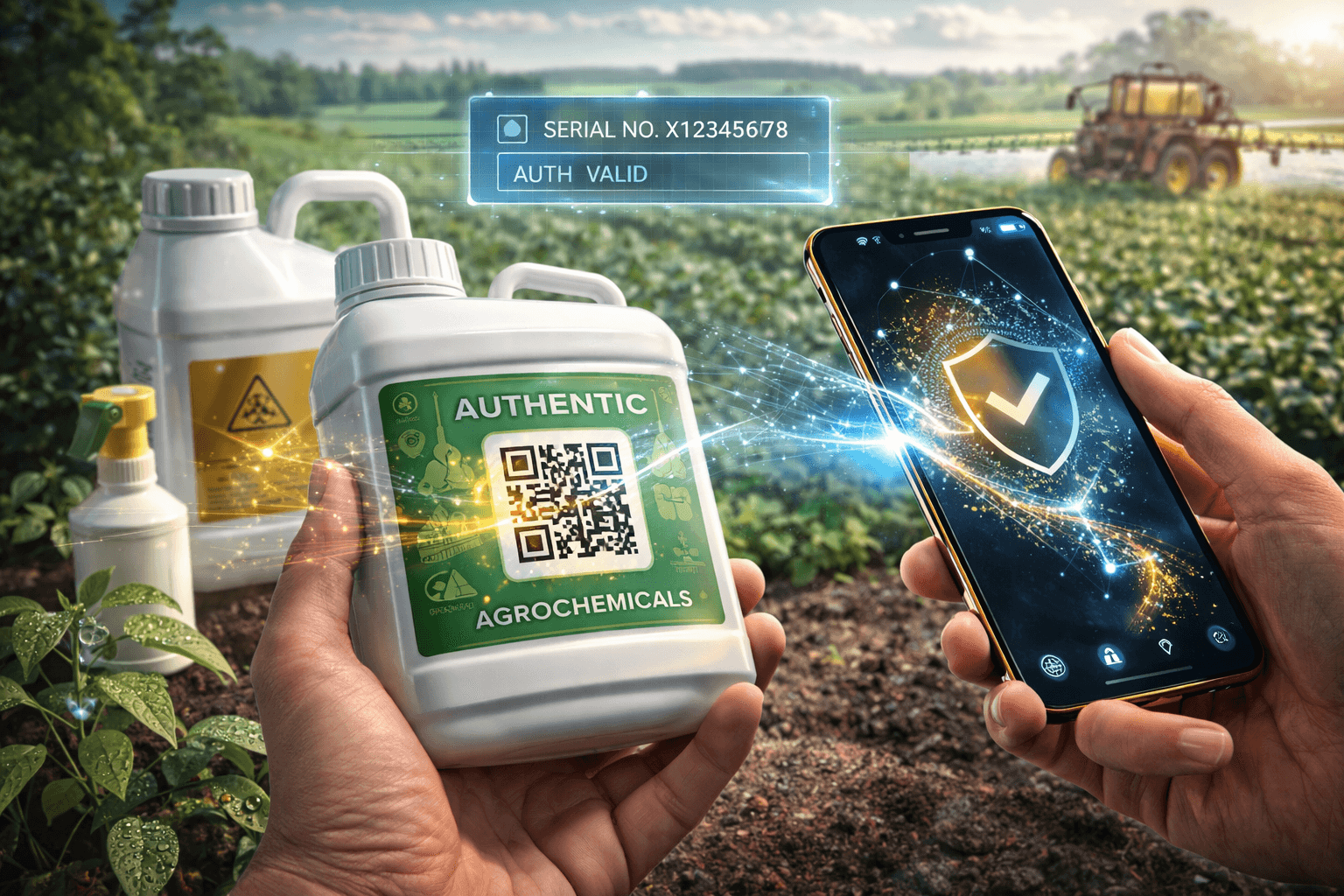
Anti-Counterfeiting Solutions for Agrochemicals: A Best Practices Guide for General Counsel
Counterfeit agrochemicals are not merely a supply chain problem—they are a legal liability that lands squarely on the desk of General Counsel. When a fake pesticide bearing your brand causes crop failure or farmer injury, your organization faces product liability claims, regulatory enforcement, and reputational damage, regardless of whether your company manufactured the counterfeit. According to the OECD's analysis of trade in counterfeit goods, agrochemicals rank among the most frequently counterfeited product categories globally, with enforcement agencies seizing billions of dollars in fake crop protection products annually. For GC teams, the question is no longer whether to deploy anti-counterfeiting solutions, but how to evaluate, procure, and operationalize them in a way that delivers forensic-ready evidence, preserves manufacturing continuity, and withstands legal scrutiny across jurisdictions. This playbook provides the framework you need.
Download the GC Best Practices Guide: Anti-Counterfeiting for Agrochemicals
Get the complete PDF playbook covering forensic workflows, procurement checklists, jurisdiction-specific compliance guidance, and sample contract language—designed specifically for Chief Legal Officers and General Counsel in the agrochemical sector.
Legal Risks from Counterfeit Agrochemicals: An Executive Summary for General Counsel
Counterfeit agrochemicals create a three-dimensional legal risk profile: product liability exposure when fake products cause harm under your brand name; regulatory enforcement risk when counterfeit products trigger violations of pesticide registration and labeling laws; and evidentiary risk when your legal team cannot produce court-admissible proof that a product is genuine or counterfeit. Each dimension compounds the others, making a reactive legal posture increasingly untenable.
Consider a mid-sized crop protection manufacturer operating in South Asia: when counterfeit versions of its flagship herbicide appeared in rural markets, the company faced farmer compensation claims totaling millions of dollars before it could demonstrate—through forensic packaging analysis—that the products were not from its supply chain. The evidentiary gap cost the company both time and settlement value.
The FAO/WHO International Code of Conduct on Pesticide Management establishes that manufacturers bear responsibility for ensuring their products are not misrepresented in the market, creating a due-diligence obligation that extends to authentication infrastructure. GC teams must treat authentication capability as a legal risk-mitigation asset, not merely a brand protection tool.
Traditional Approach vs. Ennoventure Approach: Traditional anti-counterfeiting relies on visible features—holograms, color-shifting inks, QR codes—that counterfeiters can replicate with increasing sophistication, and that provide limited forensic value in litigation because they lack cryptographic uniqueness. Ennoventure's invisible cryptographic signatures are embedded at the artwork stage, are mathematically unique per unit, and generate timestamped verification records that constitute forensic-grade evidence. The traditional approach protects brand aesthetics; Ennoventure's approach protects legal position.
Common Mistake: GC teams often delegate authentication vendor selection entirely to procurement or marketing, without requiring that the solution meet evidentiary standards. This results in solutions that look impressive in demos but cannot produce chain-of-custody documentation admissible in regulatory proceedings.
Best Practice: Establish a cross-functional authentication evaluation committee that includes Legal, QA, Supply Chain, and Procurement. Require every vendor to submit a forensic validation report and a sample chain-of-custody workflow as part of the RFP response.
Key Evaluation Criteria for GC Teams
When assessing brand protection solutions for agrochemicals, GC teams should prioritize four criteria: (1) forensic admissibility—does the authentication method produce court-ready evidence? (2) chain-of-custody integrity—is every verification event logged with timestamp and location? (3) zero manufacturing disruption—does deployment avoid production gaps that could create liability exposure? (4) field accessibility—can distributors and farmers verify authenticity without specialized equipment? Ennoventure's platform addresses all four criteria through its invisible cryptographic signature architecture.
Understanding the legal risk landscape is the essential first step, but GC teams must also navigate a complex and evolving regulatory environment. Jurisdiction-specific requirements for pesticide labeling, product registration, and enforcement evidence standards vary significantly across the markets where agrochemical companies operate—and a solution that satisfies one regulator may fall short in another. The next section maps the key regulatory frameworks your legal team must account for when evaluating authentication solutions.
Regulatory Landscape and Evidentiary Standards Across Key Jurisdictions
Agrochemical companies operating globally face a patchwork of regulatory regimes, each with distinct requirements for product authentication, labeling integrity, and enforcement evidence. Failure to align your authentication solution with jurisdiction-specific evidentiary standards can render your forensic evidence inadmissible precisely when you need it most.
In the United States, the Federal Insecticide, Fungicide, and Rodenticide Act (FIFRA) administered by the EPA requires that pesticide products be registered and labeled in strict compliance with approved specifications. Counterfeit products that bear a registered brand's label without authorization constitute a FIFRA violation, and enforcement actions require documented evidence of product inauthenticity—evidence that must meet federal evidentiary standards.
In the EU, Regulation (EC) No 1107/2009 on plant protection products mandates that only authorized products may be placed on the market, and member state enforcement agencies require traceable documentation to support seizure and prosecution. India's Insecticides Act 1968 similarly imposes registration and labeling obligations, with state-level enforcement that benefits from field-verifiable authentication records.
Traditional Approach vs. Ennoventure Approach: Traditional serialization systems generate track-and-trace records but rely on database lookups that can be spoofed if serial numbers are cloned. Ennoventure's cryptographic approach generates a verification result that is mathematically tied to the physical packaging, making database manipulation irrelevant to the authentication outcome—a critical distinction for regulatory evidence.
Common Mistake: Assuming that a single authentication standard satisfies all jurisdictions. GC teams must map their authentication solution's evidence output against the specific admissibility requirements of each market where they operate.
Best Practice: Require your authentication vendor to provide a jurisdiction-by-jurisdiction compliance matrix as part of the procurement process, confirming that verification records meet local evidentiary standards for regulatory enforcement and civil litigation.
Evidentiary Standards and Documentation Requirements
Court-admissible product authentication evidence typically requires: a scientifically validated authentication method, an unbroken chain of custody from sample collection to laboratory analysis, expert witness qualification for the authentication technology, and documentation of the verification event in a tamper-evident format. Ennoventure's brand protection technology generates timestamped, geolocated verification logs that satisfy these requirements across major jurisdictions. GC teams should review the UNODC guidance on counterfeit goods enforcement for additional evidentiary framework context.
With the regulatory landscape mapped, GC teams are better positioned to evaluate the technical approaches available in the market—and to understand which technologies translate most directly into legally defensible authentication. Not all anti-counterfeiting technologies are created equal from an evidentiary standpoint, and the distinctions matter enormously when your legal team is building a case or responding to a regulatory inquiry.
Technical Approaches and Their Legal Implications
The agrochemical anti-counterfeiting market offers several technical approaches, each with distinct legal implications. Understanding these differences is essential for GC teams selecting a solution that will hold up under legal scrutiny.
Taggants—chemical or physical markers added to products or packaging—provide forensic traceability but require laboratory analysis to verify, creating a time lag that limits their utility for field enforcement. Serialization via barcodes or QR codes enables track-and-trace but is vulnerable to cloning, weakening evidentiary value. Blockchain-based provenance records add immutability to supply chain data but depend on the integrity of data entry points. Invisible cryptographic signatures, by contrast, embed a mathematically unique, machine-verifiable marker directly into packaging artwork, combining field-speed verification with forensic-grade uniqueness.
A leading agrochemical distributor in Brazil piloted three authentication technologies simultaneously: QR-code serialization, chemical taggants, and invisible cryptographic signatures. In a subsequent enforcement action, only the cryptographic signature evidence was accepted by the local regulatory authority without requiring additional laboratory corroboration, reducing the time to enforcement by an estimated 60%.
Traditional Approach vs. Ennoventure Approach: Visible security features and serialization require counterfeiters to replicate only what they can see; Ennoventure's invisible signatures require replicating a cryptographic key that is never exposed on the packaging surface. For legal teams, this means the authentication result is binary and mathematically certain—not a matter of expert opinion about whether a hologram "looks right."
Common Mistake: Selecting a technology based on cost per unit without modeling the legal cost of authentication failures—including the cost of expert witnesses needed to explain complex taggant chemistry to a judge or jury.
Best Practice: Prioritize authentication technologies that produce self-explanatory, binary verification results (authentic/not authentic) with a complete digital audit trail, minimizing the expert witness burden in legal proceedings.
Invisible Cryptographic Signatures: The Legal Advantage
Ennoventure's invisible cryptographic signature technology embeds authentication directly into the packaging artwork at the pre-press stage, requiring no changes to manufacturing equipment or processes. Verification occurs via standard smartphone camera in approximately 2.3 seconds, with no app download required. The verification event is logged with timestamp, geolocation, and device identifier, creating a forensic record that supports chain-of-custody documentation. For GC teams, this means authentication evidence is generated at every point of contact in the supply chain—from distributor receipt to farmer purchase—building a comprehensive evidentiary record. Learn more about the underlying smart packaging technology.
Schedule Your Compliance & Evidence-Readiness Assessment
Ennoventure's legal and technical team will review your current authentication posture, map gaps against jurisdiction-specific evidentiary standards, and provide a tailored compliance roadmap—at no cost for qualified agrochemical manufacturers.
Selecting the right technology is necessary but not sufficient. Even the most sophisticated authentication system fails to deliver legal value if the evidence it generates is not collected, preserved, and documented according to chain-of-custody standards. The next section provides a practical workflow for GC teams to operationalize forensic evidence readiness across their supply chain.
Evidence Readiness and Chain-of-Custody Workflows
Forensic evidence readiness requires more than deploying an authentication technology—it demands a documented workflow that governs how verification events are recorded, how samples are collected and preserved, and how the evidentiary record is maintained from the point of authentication to its potential use in legal proceedings.
A European agrochemical manufacturer facing a grey-market diversion investigation was able to demonstrate, through Ennoventure's verification logs, that products sold in an unauthorized market had been authenticated in a different geography six weeks earlier—providing the evidentiary foundation for a successful civil injunction against the diverting distributor.
Chain-of-custody best practice requires: (1) automated logging of every verification event with timestamp, GPS coordinates, and device identifier; (2) secure, tamper-evident storage of verification records in a system with audit trail capability; (3) a documented sample collection protocol for physical product samples submitted to forensic laboratories; and (4) a written evidence-preservation policy that specifies retention periods aligned with applicable statutes of limitations.
Traditional Approach vs. Ennoventure Approach: Manual chain-of-custody documentation—paper logs, spreadsheets, email chains—is vulnerable to gaps, alterations, and authentication challenges in court. Ennoventure's platform automates the evidentiary record at every verification touchpoint, creating an immutable digital chain of custody that requires no manual intervention and is resistant to tampering.
Common Mistake: Treating chain-of-custody documentation as an afterthought to be assembled after an incident occurs, rather than as a continuous operational process embedded in the authentication workflow.
Best Practice: Implement a standing evidence-preservation protocol that automatically archives all verification records for a minimum of seven years, with quarterly audits by the legal team to confirm record integrity and completeness.
Forensic Lab Integration and Court-Admissible Processes
When physical product samples are required for laboratory analysis—for example, to confirm the presence of an active ingredient or to analyze a chemical taggant—the chain of custody must extend from the field collection point through laboratory receipt, analysis, and reporting. GC teams should establish pre-approved laboratory partnerships and standardized sample collection kits before an incident occurs. Ennoventure's forensic validation documentation provides a template chain-of-custody form and laboratory submission protocol compatible with major accredited testing facilities. Review the on-field brand protection agrochemical case study for a documented example of this workflow in practice.
Robust chain-of-custody workflows are most effective when they extend all the way to the field—to the distributors, retailers, and farmers who are often the first to encounter counterfeit products. But field verification presents unique challenges in agrochemical markets, where connectivity is limited and users may not be technologically sophisticated. The next section addresses how inclusive, low-bandwidth verification workflows protect both your supply chain integrity and your legal position.
Field Verification and Inclusion: Low-Bandwidth and WhatsApp Workflows
In many of the world's largest agrochemical markets—India, Brazil, Nigeria, Indonesia—the end users of crop protection products are smallholder farmers operating in areas with limited internet connectivity and varying levels of digital literacy. An authentication solution that requires a high-bandwidth app or a sophisticated device excludes the very users who are most vulnerable to counterfeit products and most likely to generate the field-level evidence that supports enforcement actions.
Ennoventure's mobile verification platform enables authentication via standard smartphone camera or WhatsApp, requiring no app download and functioning effectively on low-bandwidth connections. In a documented agrochemical deployment in South Asia, field agents authenticated over 50,000 product units across rural distribution networks using WhatsApp-based verification, generating a geolocated verification log that was subsequently used to map counterfeit infiltration points in the supply chain.
The GS1 global traceability standards recognize that effective supply chain authentication must be accessible at every node, including the last mile. WhatsApp verification logs, when combined with Ennoventure's cryptographic authentication records, create a field-level evidentiary layer that complements laboratory and distributor-level documentation.
Traditional Approach vs. Ennoventure Approach: App-based verification solutions require smartphone ownership, app installation, and reliable data connectivity—barriers that exclude a significant proportion of agrochemical end users in emerging markets. Ennoventure's no-app, WhatsApp-compatible workflow removes these barriers, expanding the evidentiary network to include field-level verification events that traditional solutions miss entirely.
Common Mistake: Deploying a field verification solution without multilingual support, resulting in low adoption rates among non-English-speaking users and gaps in the field-level evidentiary record.
Best Practice: Require your authentication vendor to demonstrate multilingual verification capability in the languages of your key markets, and include field adoption rate KPIs in your vendor SLA to ensure the evidentiary network remains comprehensive.
Multilingual Verification and Inclusive Compliance
Inclusive field verification is not only a commercial imperative—it is a compliance consideration. Regulatory frameworks in markets such as India and Brazil increasingly require that product authentication be accessible to end users, including farmers. Ennoventure's platform supports multilingual verification interfaces, ensuring that authentication is accessible regardless of the user's language or digital literacy level. GC teams should document their inclusive verification capability as part of their regulatory compliance posture, demonstrating proactive due diligence to enforcement authorities.
With a technically sound and legally defensible authentication solution in place, GC teams need a structured procurement framework to ensure that vendor commitments are contractually enforceable and that compliance benefits are quantifiable for board-level reporting. The following section provides a procurement checklist and ROI model designed specifically for legal stakeholders.
Procurement Checklist and ROI/Compliance-Impact Model
Procuring anti-counterfeiting solutions without a GC-informed framework risks selecting a vendor that delivers marketing value but not legal value. The following checklist and ROI model are designed to give legal teams the tools to evaluate vendors rigorously and quantify the compliance impact of their investment.
Procurement Checklist for GC Teams: (1) Forensic validation methodology: request a written report with third-party lab validation. (2) Chain-of-custody documentation: require a sample workflow diagram and evidence-preservation policy. (3) Jurisdiction compliance matrix: confirm evidentiary standards are met in all operating markets. (4) Zero-line-disruption guarantee: obtain a contractual SLA confirming no manufacturing process changes are required. (5) Field verification accessibility: require multilingual, no-app verification capability with documented adoption metrics. (6) Data retention and audit rights: specify minimum seven-year record retention and annual audit rights in the contract. (7) Incident response SLA: require a defined response time for authentication-related legal incidents.
ROI Framework for Legal Stakeholders: Model ROI across three dimensions: avoided litigation costs (estimate the average cost of a counterfeit-related product liability claim multiplied by the probability of occurrence without authentication); regulatory penalty avoidance (map potential fines under FIFRA, EU Regulation 1107/2009, or applicable local law); and brand equity recovery (estimate revenue impact of counterfeit-driven market share loss). Use Ennoventure's online ROI calculator to generate a compliance-impact model tailored to your supply chain. For a CFO-oriented perspective on the same framework, see the CFO Guide to Invisible Brand Protection ROI.
Common Mistake: Presenting authentication investment to the board as a cost center rather than a risk-mitigation asset. GC teams that quantify avoided legal costs and regulatory penalties consistently secure faster procurement approval.
Best Practice: Include authentication KPIs—verification event volume, counterfeit detection rate, enforcement action success rate—in your annual legal risk report to demonstrate ongoing compliance value to the board.
Sample Contract Clauses for Authentication Vendors
Key contract provisions for anti-counterfeiting solution agreements should include: (a) a forensic evidence warranty confirming that verification records meet applicable evidentiary standards; (b) a data integrity clause requiring tamper-evident record storage with audit trail capability; (c) an incident response obligation specifying the vendor's duty to support legal proceedings with expert testimony and technical documentation; and (d) a zero-line-disruption warranty with liquidated damages for any manufacturing disruption caused by the authentication system. GC teams should also negotiate IP ownership of verification data generated by the platform.
Abstract frameworks become compelling when grounded in real-world outcomes. The following section presents Ennoventure's documented agrochemical case study and provides concrete next steps for GC teams ready to move from evaluation to procurement.
Case Study and Next Steps: Ennoventure in the Agrochemical Supply Chain
Ennoventure's on-field brand protection deployment for a major agrochemical manufacturer demonstrates how invisible cryptographic authentication translates into measurable legal and operational outcomes. The deployment covered a multi-state distribution network in South Asia, where counterfeit infiltration had been identified across multiple SKUs.
Within the first six months of deployment, the manufacturer's legal team was able to use Ennoventure's verification logs to identify three distinct counterfeit entry points in the distribution network, support two regulatory enforcement actions with court-admissible authentication evidence, and reduce the average time to counterfeit identification from weeks to hours. Zero manufacturing line disruptions were recorded during the rollout, preserving production continuity and eliminating a potential source of liability exposure during the transition period.
The full case study, including forensic validation documentation and chain-of-custody workflow diagrams, is available through Ennoventure's case studies library. GC teams evaluating authentication solutions are encouraged to request this documentation as part of their vendor due diligence process.
Common Mistake: Waiting for a counterfeit incident to occur before initiating authentication procurement. By the time a legal crisis materializes, the evidentiary infrastructure needed to respond effectively is not yet in place.
Best Practice: Initiate authentication procurement as a proactive legal risk-mitigation measure, with a target deployment timeline of 90 days from vendor selection to full supply chain coverage—a timeline Ennoventure's zero-line-disruption architecture makes achievable.
Recommended Next Steps for General Counsel
GC teams ready to act should take three immediate steps: (1) Download the GC Best Practices Guide to share with your cross-functional evaluation committee; (2) Schedule a compliance and evidence-readiness assessment with Ennoventure's legal and technical team to map your current authentication gaps; (3) Use the online ROI calculator to build a board-ready compliance-impact model. Each step is designed to move your organization from awareness to procurement-ready in the shortest possible timeframe, with Ennoventure's team providing support at every stage.
Frequently Asked Questions
What legal risks do counterfeit agrochemicals create for General Counsel?
Counterfeit agrochemicals expose companies to product liability litigation, regulatory enforcement actions, and reputational harm across multiple jurisdictions. When a farmer suffers crop loss or personal injury from a fake pesticide bearing your brand, your legal team may face claims even if your company did not manufacture the counterfeit product. Ennoventure's forensic-grade authentication creates a documented, court-admissible record that clearly distinguishes genuine products from fakes, giving GC teams a defensible evidentiary foundation. Proactive deployment of authentication infrastructure is the most effective way to reduce this exposure before an incident occurs.
How do anti-counterfeiting solutions support legal evidence admissibility?
Admissible evidence in counterfeiting cases typically requires a documented chain of custody, a verifiable authentication method, and expert validation. Ennoventure's invisible cryptographic signatures embedded in packaging generate tamper-evident, timestamped verification records that can be preserved and presented in regulatory investigations or civil litigation. GC teams should require vendors to provide written evidence-workflow documentation before procurement. Requesting a sample forensic validation report during the RFP process is a practical first step.
What is an invisible cryptographic signature in agrochemical packaging?
An invisible cryptographic signature is a machine-readable authentication marker embedded directly into the packaging artwork—no QR code, hologram, or physical label is added. The signature is verified via smartphone camera in approximately 2.3 seconds without requiring a dedicated app. This approach is particularly valuable for agrochemicals because it cannot be replicated by counterfeiters who copy visible security features, and it generates a mathematically unique verification result that constitutes strong forensic evidence.
How does serialization differ from cryptographic authentication for legal purposes?
Serialization assigns a unique identifier to each unit, enabling track-and-trace across the supply chain, but serial numbers can be cloned or reprinted by counterfeiters, weakening their evidentiary value. Cryptographic authentication uses mathematically unique signatures that cannot be duplicated, providing stronger forensic proof of authenticity for legal proceedings. Ennoventure's guide on anti-counterfeiting beyond serialization explores this distinction in depth and is recommended reading for GC teams evaluating their current authentication posture.
What jurisdictions have the most stringent agrochemical anti-counterfeiting regulations?
The EU Plant Protection Products Regulation (EC 1107/2009), the U.S. Federal Insecticide, Fungicide, and Rodenticide Act (FIFRA), and India's Insecticides Act 1968 each impose labeling, registration, and enforcement obligations that create legal exposure when counterfeit products enter the supply chain. GC teams operating across these jurisdictions must ensure their authentication solution generates jurisdiction-aware compliance records. Ennoventure's platform is designed to support multi-jurisdictional evidentiary documentation, and the team can provide a jurisdiction compliance matrix upon request.
Can WhatsApp-based verification be used as legal evidence?
WhatsApp verification logs—when combined with timestamped cryptographic authentication records and proper chain-of-custody documentation—can contribute to a broader evidentiary package. The verification event itself is recorded server-side, creating a traceable digital trail. GC teams should work with their vendor to ensure that mobile verification logs are preserved in a format compatible with their jurisdiction's electronic evidence standards, and should include data retention requirements in the vendor contract.
What should a procurement checklist for anti-counterfeiting solutions include for legal teams?
A GC-focused procurement checklist should cover: forensic validation methodology and lab-testing protocols; chain-of-custody documentation standards; evidence admissibility track record in relevant jurisdictions; zero-line-disruption guarantees; and SLA commitments for incident response and investigation support. Contract clauses should specify data retention periods, audit rights, and indemnification for authentication failures. Ennoventure provides a procurement-ready documentation package including sample contract language for qualified agrochemical manufacturers.
How do you calculate ROI on anti-counterfeiting solutions for legal stakeholders?
Legal ROI should be modeled across three dimensions: avoided litigation costs from counterfeit-related product liability claims; regulatory penalty avoidance through documented compliance; and brand equity preservation measured by market share recovery in affected regions. Ennoventure's online ROI calculator allows GC and finance teams to input exposure estimates and generate a compliance-impact model tailored to their supply chain footprint. The CFO Guide to Invisible Brand Protection ROI provides additional modeling methodology for cross-functional stakeholder alignment.
What is chain of custody in product authentication, and why does it matter legally?
Chain of custody refers to the documented, unbroken sequence of custody, control, transfer, and analysis of a product or evidence sample from the point of authentication to its presentation in legal proceedings. Without a rigorous chain-of-custody workflow, authentication evidence may be challenged or excluded in court. Ennoventure's platform generates timestamped, geolocated verification records at each custody transfer point, supporting court-admissible documentation that satisfies evidentiary standards across major jurisdictions.
How does Ennoventure's solution avoid disrupting manufacturing lines?
Ennoventure embeds invisible cryptographic signatures at the artwork stage of packaging design, meaning no physical changes to the production line, no additional labels, and no new equipment are required. This zero-line-disruption approach eliminates the operational risk and potential liability gaps that arise when authentication retrofits cause production downtime or packaging inconsistencies. GC teams can confirm this guarantee through contractual SLA language during procurement, with liquidated damages provisions for any disruption.
What multilingual considerations apply to field verification in agrochemical markets?
In markets such as India, Brazil, and sub-Saharan Africa, farmers and field agents may operate in multiple regional languages with varying levels of digital literacy. Ennoventure's mobile verification workflow supports multilingual interfaces and requires no app download, making it accessible via standard smartphone cameras or WhatsApp. GC teams should require vendors to demonstrate multilingual verification capability as part of inclusive compliance due diligence, and should include field adoption rate KPIs in vendor SLAs.
How should GC teams request forensic validation documentation from anti-counterfeiting vendors?
GC teams should request a formal forensic validation report that includes: the authentication technology's scientific basis, third-party lab testing results, a sample chain-of-custody workflow diagram, and at least one documented case study where the evidence was used in a regulatory or legal proceeding. Ennoventure provides forensic validation documentation and agrochemical case study materials upon request through its compliance assessment process. Including this documentation request in your RFP is the most efficient way to filter vendors by legal readiness.
Conclusion
For General Counsel in the agrochemical sector, deploying the right anti-counterfeiting solutions is a legal imperative, not a marketing preference. The stakes—product liability exposure, regulatory enforcement, evidentiary gaps in litigation—are too high to leave authentication to chance or to delegate without legal oversight. This guide has outlined the key dimensions of a GC-informed approach:
Evaluate authentication solutions against forensic admissibility and chain-of-custody standards, not just brand protection metrics.
Map your solution's evidence output against jurisdiction-specific regulatory requirements before procurement.
Prioritize invisible cryptographic authentication for its mathematical uniqueness and field-speed verification capability.
Quantify compliance ROI in terms of avoided litigation costs and regulatory penalties to secure board-level investment approval.
The time to build your evidentiary infrastructure is before a counterfeit incident occurs. Explore Ennoventure's full suite of brand protection solutions and take the first step toward a legally defensible agrochemical supply chain today.
Request a Demo of Ennoventure's Forensic-Ready Authentication Workflows
See how invisible cryptographic signatures, automated chain-of-custody logging, and WhatsApp-based field verification work together to create a legally defensible authentication system for your agrochemical supply chain. Our team will walk you through the evidentiary workflows and procurement documentation in a live session tailored to your legal team's requirements.
FAQs
What is the difference between product authentication and track and trace?
Track and trace records where a product has been. Authentication proves the physical item is genuine. A copied serial number passes track-and-trace checks; it doesn't pass authentication.
Who can authenticate a product?
Anyone with a smartphone: consumers, retailers, distributors, mechanics, farmers, pharmacists, inspectors and your own field teams. No app is needed.
What happens when a product fails authentication?
The scan is logged with time, place and batch, and an alert reaches your team. Repeated failures in one area show where counterfeits are entering the supply chain.
Does authentication slow down the production line?
No. The signature is part of the artwork, so printing and packing run exactly as before.
Can product authentication be added to existing packaging?
Yes. We embed the signature in your current artwork within 48 hours. Where artwork can't change, Ennabel™ security labels carry the same signature on a label.