Product Verification


Product verification is the systematic process of confirming the authenticity, integrity, and compliance of a product at key checkpoints in the supply chain and throughout its lifecycle. It uses a combination of physical inspection, scannable identifiers, serialization, forensic or molecular markers, and real-time data checks so that brands, regulators, retailers, and consumers can be confident that a specific item is legitimate and untampered.

Why Product Verification Matters for Brand Protection

Product verification sits at the heart of effective brand protection, because it turns every pack or unit into a testable claim: either it passes verification as genuine and compliant, or it is flagged as suspicious. This protects revenue by intercepting counterfeits and diverted stock, but it also safeguards brand equity and customer trust by ensuring that only authentic, quality-controlled products reach end users.

In regulated sectors such as pharmaceuticals, agrochemicals, automotive, and food, verification supports compliance by confirming that products carry the right identifiers and are aligned with track-and-trace records and recall lists. It also provides a data foundation for aftersales operations—helping warranty and returns teams quickly confirm whether a claimed product is eligible, or whether it appears to be counterfeit or out-of-policy.

  • Counterfeit and fraud prevention: Verification checks stop fake, stolen, or diverted products from blending into legitimate flows, especially when combined with secure serialization and track-and-trace data.

  • Regulatory compliance and safety: In industries like medicines and pesticides, verification ensures that only registered, correctly labeled products move through the supply chain, reducing safety incidents and legal exposure.

  • Customer trust and loyalty: Enabling end customers to verify products via smartphone or web tools turns packaging into a trust touchpoint, reinforcing brand promises on quality and authenticity.

  • Operational efficiency: Verified identifiers streamline recalls, returns, and warranty decisions by providing clear evidence of origin, batch, and movement history.

Core Elements of Product Verification

Effective product verification usually combines several complementary layers rather than relying on a single check, especially in high-risk and high-value categories. These layers cover how a product is marked, how it is scanned or inspected, and how verification events are stored and analyzed in back-end systems.

  • Unique identifiers: Serial numbers, secure QR codes, NFC or RFID tags, and digital watermarks create a distinct identity for each unit or batch, which can be checked against authoritative records.

  • Physical and covert features: Holograms, tamper-evident elements, microtext, invisible inks, and forensic markers add layers of difficulty for counterfeiters trying to copy a product.

  • Digital back-end systems: Cloud databases, verification APIs, and analytics platforms store valid identities, maintain status (such as active, recalled, or expired), and log verification events over time.

  • Verification interfaces: Mobile apps, web portals, messaging workflows, and scanner integrations give different stakeholders—inspectors, retailers, end customers—simple ways to verify products in context.

  • Policies and business rules: Rules define who can verify, how many times, what to do if a check fails, and how to escalate suspected counterfeiting or diversion cases.

Product Verification vs Product Authentication

In practice, “product verification” and product authentication are closely related, but they emphasize slightly different questions. Authentication asks, “Is this product genuine and from the right source?”, while verification broadens the scope to, “Does this product and its data match what should be true about it—genuineness, condition, status, and eligibility?”.

A robust brand protection strategy uses both concepts together: authentication confirms that the item originates from the brand’s authorized production, and verification confirms that it remains valid in its current context—correct market, correct status, not recalled, not previously flagged as suspicious. This dual approach is increasingly expected by regulators and supply chain partners as they try to reduce fraud, improve traceability, and maintain continuous trust from factory to end user.

How Ennoventure Enables Product Verification

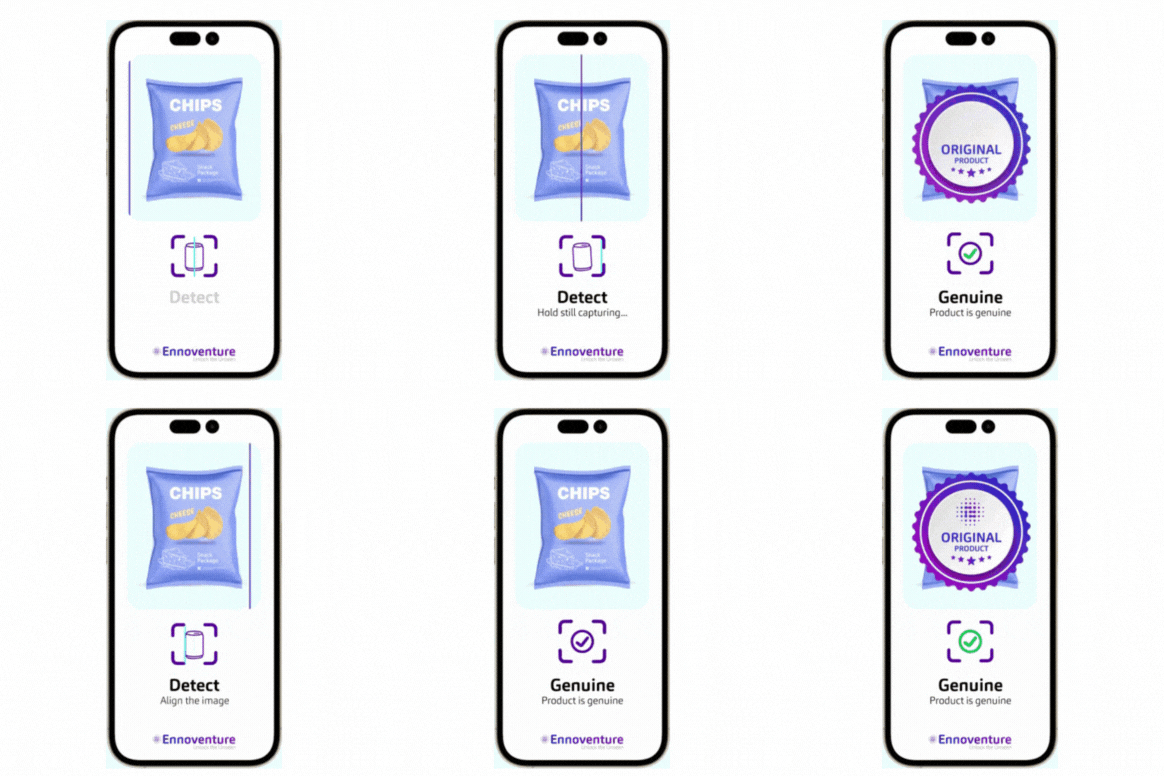
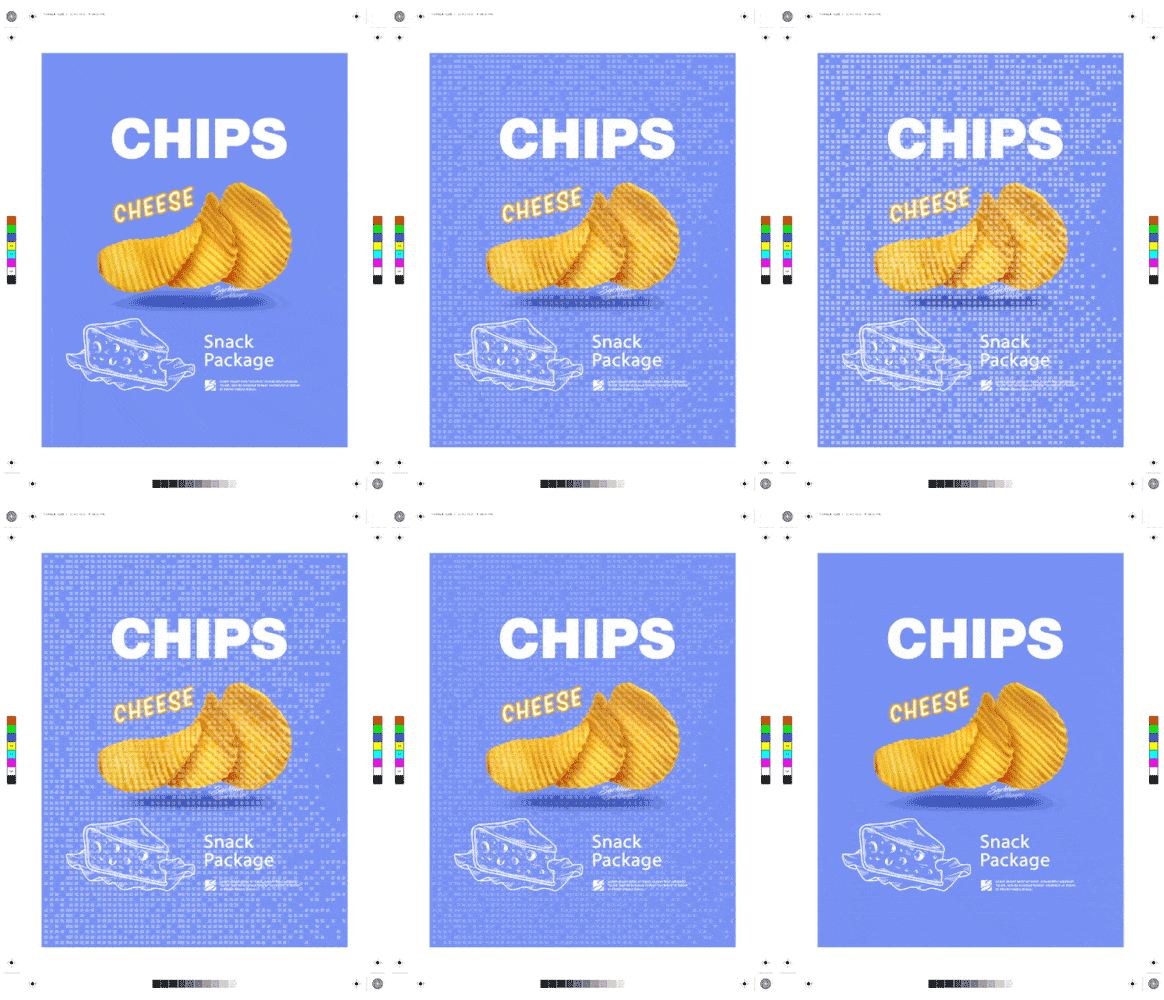
Ennoventure uses invisible, cryptography-based signatures embedded directly into packaging artwork to make product verification fast and reliable without adding extra labels, stickers, or hardware. Brands upload existing designs, and Ennoventure’s technology weaves secure digital markers into the print layers, so each pack can be verified using an ordinary smartphone and a cloud-based decision engine.

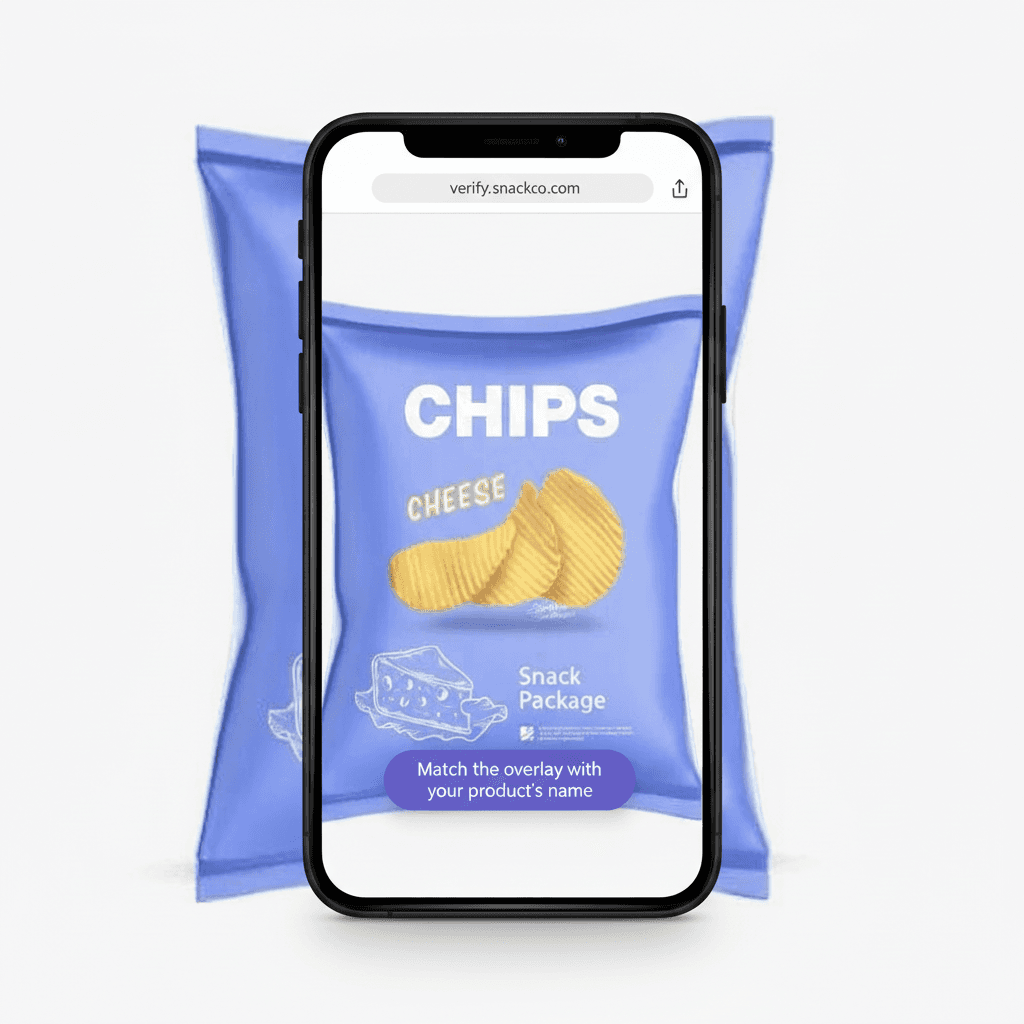
When a stakeholder scans the pack through a brand-owned app, microsite, or integrated channel, the system checks the invisible signature against an authoritative database of valid items. The result confirms not just authenticity but also status—for example, whether the product is intended for that country, whether it is recalled or expired, or whether it has already triggered suspicious behavior in the past.

  • Invisible cryptographic signatures: Artwork-level security that is extremely difficult to detect or reverse-engineer, even when counterfeiters copy visible design elements.

  • Zero line-change deployment: Protection can be rolled out using existing prepress and printing workflows, avoiding new materials or complex retrofits on production lines.

  • Smartphone-first verification: Any authorized user with a standard smartphone can verify products, which lowers barriers for field teams, retailers, and consumers.

  • Real-time intelligence: Verification events stream into dashboards that show where genuine products move, where failed checks spike, and where grey-market or counterfeit risk is emerging.

  • Integration with brand protection strategy: Ennoventure’s approach complements broader brand protection solutions, connecting verification data with marketing, compliance, and supply chain decisions.

Practical Examples of Product Verification

In pharmaceuticals, manufacturers combine product verification with serialization and regulatory track-and-trace platforms so that every pack’s code is checked before dispensing, helping to block falsified medicines and support targeted recalls. Ennoventure’s invisible signatures can be layered on top of mandated identifiers, giving regulators, pharmacists, and patients an additional, hard-to-copy signal that the medicine they hold is genuine and in the right market.

In FMCG and food, product verification ensures that on-shelf goods are genuine and fresh, while also enabling connected experiences such as loyalty programs, recipe content, and personalized offers when a code is verified successfully. For electronics and automotive parts, verification at dealerships and service centers confirms that high-value components are authentic before installation, reducing safety and warranty risks from counterfeit spares.

Trends and Future Outlook

Product verification is evolving from occasional manual checks into continuous, data-driven assurance powered by smart packaging, AI, and real-time analytics. As regulations and partners demand more transparency, brands are integrating verification into everyday workflows—receiving goods, stocking shelves, performing service, and even engaging consumers via mobile experiences.

  • AI-enhanced verification analytics: Machine learning helps brands spot abnormal clusters of failed checks, repeated scans of the same code, or patterns that suggest diversion or organized fraud.

  • Convergence with digital identity concepts: Discussions around verification vs authentication in identity security are influencing how brands think about verifying product “identity” and life-cycle status in a similar layered way.

  • Connected, intelligent packaging: Verification is increasingly bundled with smart packaging features—such as contextual content and sustainability insights—so that one scan can both prove authenticity and deliver value-added information.

  • Platform-based brand protection: Companies are moving from point solutions to integrated platforms that cover digital authentication, verification, monitoring, and analytics in one environment.

Further Reading & Solutions